Gastronomy in the Tang Dynasty
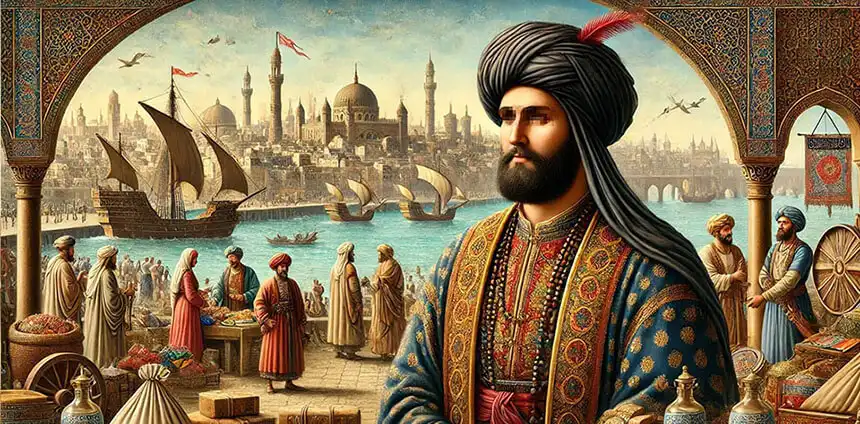
The Tang table was the most diverse in the pre-modern world. Wheat and millet in the north, rice and fish in the south, mutton and dairy on the steppe frontier, the first great age of tea, exotic fruits and aromatics arriving by caravan and dhow, and a restaurant culture in the great cities that foreigners found astonishing — all of it documented in government monographs, poetry, tomb murals, and the foreign accounts of the age. To eat in the Tang was to taste the whole known world.
The Structure of the Meal
Tang cuisine rested on the ancient north-south divide of Chinese food. The north — the political heartland of the dynasty — ate wheat: steamed breads, boiled dumplings (the ancestors of the wonton and the jiaozi), noodles of every width, leavened breads baked and steamed, washed down with millet and wheat-based wines. The south ate rice, from the irrigated paddies of the Yangzi delta and the double-cropping lowlands, with fish from the lakes and rivers and the preserved and fermented flavors that the damp climate demanded. The court, seated between the two at Chang’an, ate both, and the Grand Canal made the combination a matter of course: southern rice moving north by grain barge, northern wheat products following the court and the armies south. The banquet structure of the age — as the poetry and the tomb paintings record — ran from cold dishes and preserved meats through soups and hot courses to sweets and fruits, eaten seated at low tables from individual trays and dishes, with rice or bread as the staff of life and the meats and vegetables as the measure of status.
Tea: The New Civilization
No single change at the Tang table mattered more than tea. Known in the south for centuries, tea spread through the empire in the eighth century with astonishing speed — a consequence, the historians of the trade suggest, of the Buddhist monasteries, whose prohibition on alcohol made the stimulating leaf the monks’ drink of choice, and of the growing southern economy that could supply it. In 780 Lu Yu — orphan, monk, and connoisseur — published the Classic of Tea (Cha jing), the first monograph on the subject in world history: the taxonomy of grades, the geography of the producing districts, the twenty-seven implements of the proper preparation, and the whole ideology of the civilized leaf. The court took it up: the salt-and-tea tax of 793 made tea a fiscal pillar of the late dynasty, and the Buddhist poet-monks made it a spiritual one. Within a century the Japanese embassy was carrying the seedling and the ritual home; within three, the Turkic peoples were drinking tea in such quantities that Tang silk became their currency to pay for it. The Tang had invented, almost by accident, the most widespread beverage culture on earth.
The Silk Road Pantry
The cosmopolitan table of the Tang was stocked from the caravan routes. From the steppe and the western regions came mutton and beef, dairy products — kumiss, butter, cheeses that Chinese gourmets regarded with fascinated distaste — and the grape, whose wine the poets celebrated and whose cultivation in the northwest the dynasty itself sponsored. From Persia and Sogdiana came the aromatics that transformed cooking: asafetida, coriander, sesame, the pepper and the sugar-candy that the foreign merchants carried to the capitals’ markets. From the southern seas came the tropical luxuries: the lychee that Yang Guifei’s courier service made infamous, the citrus and the areca nut, the coconut and the spices of the Indian Ocean trade. Sugar itself — cane sugar technology borrowed from India in the early Tang — began its long transformation of Chinese sweetness in these centuries. The foreign quarters of the capitals served their own cuisines — the Persian bakeries and Sogdian wine-shops that the poets mention — and the court’s banquets staged the world: the horses’ milk wine of the Turks, the music of Kucha, and the dishes of every embassy, served in the order of the tribute hierarchy itself.
Eating Out and the Urban Table
The great cities ate in public to a degree the medieval world rarely matched. Chang’an’s market wards held restaurants, wine-shops, and cook-stalls licensed and inspected by the market commissioners; Yangzhou’s pleasure quarters fed the boat-masters and salt merchants on the wealth of the canal; Guangzhou’s foreign quarter cooked for the Arab and Persian trade in the cuisines of home. The urban eatery culture the foreign accounts describe — Sulaiman al-Tajir’s Guangzhou, with its granaries and its cooks — impressed travelers precisely because it was normal: hot food, at all hours, for anyone with cash, in cities of a million people. Rural life ate differently and mostly at home, on the grain and vegetables of the allotment farm, with meat at the New Year and the festivals; but the monastery kitchens, the market towns’ festival stalls, and the temple fairs brought even the village within reach of the urban table on the great occasions.
Historical Assessment
The Tang table survives most vividly where the Tang itself survives — in the tomb murals of the capitals’ nobles, laid with the painted dishes of a feast for eternity; in the Classic of Tea, still read by every tea tradition on earth; in the foreign merchants’ accounts, astonished at the scale and order of the Chinese food economy; and in the regional cuisines themselves, whose historians trace their foundations to the Tang unification of north and south. The dynasty’s gastronomic legacy was the proof of its cosmopolitanism: a cuisine that could hold the steppe and the paddy, the grape and the tea leaf, the Persian spice and the southern fish, in a single civilization — and call it dinner.
References & Historical Sources
- Lu Yu, Classic of Tea (Cha jing, 780).
- Old Book of Tang and New Book of Tang, treatise on food and money (Shihuo zhi), on the salt and tea taxes.
- Abu Zayd al-Sirafi and Sulaiman al-Tajir, for the foreign view of the Chinese food economy.
- Tang tomb murals of the Qianling and Xingyuanling complexes, for banquet scenes.
- Michael Freeman, “Sung” and E. N. Anderson, The Food of China (1988), for the Tang foundations.