Lu Yu and The Classic of Tea
Written by the Tang scholar-recluse Lu Yu (陆羽, 733–804) in the second half of the …
Beneath its emperors and armies, the Tang was a society of extraordinary sophistication and color — of silk-clad ladies and polo-playing nobles, of cosmopolitan markets and tea-drinking scholars, of farmers under the equal-field system and merchants in the foreign quarters of the great ports. This section recovers the texture of Tang life: how people dressed, what they ate, how they amused themselves, and how their society was organized from the palace to the village.
Tang society was a hierarchy of law and of custom, and the two did not always agree. In law, the free population was divided into privileged and common strata, with the “good” (liang) and “base” (jian) categories marking the vast gulf between ordinary households and the unfree — slaves, government workers in hereditary service, entertainers and musicians of official status. In custom, the true aristocracy of the age was the great clan network of the northeast — the Lis of Zhaojun, the Zhengs of Xingyang, the Cuis of Boling, the Wangs of Taiyuan — whose pedigrees the court’s own genealogical offices ranked in official lists, and whose daughters the imperial family itself courted in marriage. Below them stood the examination elite, growing through the dynasty as the jinshi degree became the recognized road to power; below that, the mass of registered farming households on whom the state’s registers, taxes, and army rolls all depended; and beneath everything, the unfree and the unregistered, from palace slaves to the boat people and the frontier tribal auxiliaries whom the census never quite counted.
For the farming majority, life ran on the rhythm of the agricultural year and the state’s demands: the land allotment under the equal-field system, the grain and cloth taxes, the labor service, the military summons when the banners went up. Village society was organized in mutual-responsibility groups of households, taxed, policed, and conscripted together. The city was a different world: the capitals were gridded giants — Chang’an the largest city on earth, its walled wards locking at night, its eastern and western markets roaring by day — while the great provincial cities, Yangzhou above all, lived by trade and pleasure. Between village and metropolis lay the market towns and temple fairs, the monastery economy with its mills and oil presses and pawnshops, and the frontier garrison towns where Chinese farming colonies, Sogdian merchants, and tribal auxiliaries built a hybrid world the like of which China would not see again until the Mongol age.
Tang women occupied a position remarkable by the standards of both earlier and later Chinese history. The dynasty’s own aristocracy was half-Xianbei in custom: women rode, hunted, played polo, managed estates, and appeared in public in ways that shocked conservative moralists, who wrote their disapproval into the didactic literature of the age. Elite women were educated, wrote poetry, took Taoist vows as an honored alternative to marriage, and ran the great households. Law gave the Tang wife a standing her Song and Ming successors would not know: she entered marriage with her own dowry property, could be divorced only on specified statutory grounds, and as widow commanded her children and her household. The dynasty produced the only female emperor in Chinese history and a succession of empresses and princesses who ruled in fact; the counter-argument of the age — the conservative family codes that the examinations would later canonize — was the protest of men who had watched the palace women govern and meant to make sure it never happened again.
The material culture of the Tang was the richest of any Chinese age before the Song. Silk was the currency of prestige — woven into robes whose colors and patterns were regulated by sumptuary law, printed and painted in workshops that served the court and the export trade alike. Tea, spreading from the southwest through the eighth century, became the national beverage and the subject of the world’s first monograph on the subject, Lu Yu’s Classic of Tea. Food ran from the wheat and millet of the north to the rice and fish of the south, seasoned with the first stirrings of the regional cuisines and sweetened with the sugar technology the era borrowed from India. Entertainment filled the cities: the pleasure quarters of the capitals with their courtesans, musicians, and actors; the polo grounds and hunt parks of the aristocracy; the temple festivals and story-telling booths of the common people. The pages of this section take up each thread — fashion, food, leisure, and the structure of society itself — and follow it through the richest social fabric of the medieval world.
Written by the Tang scholar-recluse Lu Yu (陆羽, 733–804) in the second half of the …
When the Tang dynasty was founded in 618, high government office was overwhelmingly …
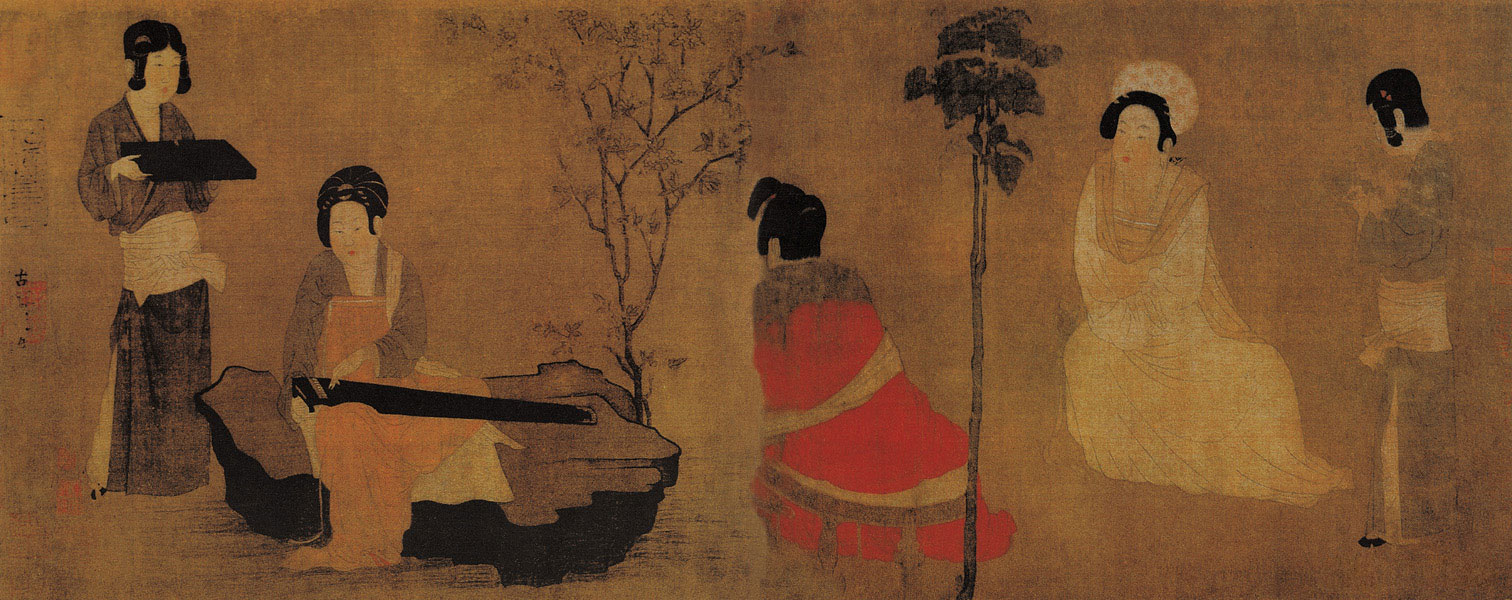
Tang fashion was the most cosmopolitan costume in the medieval world — silk from …
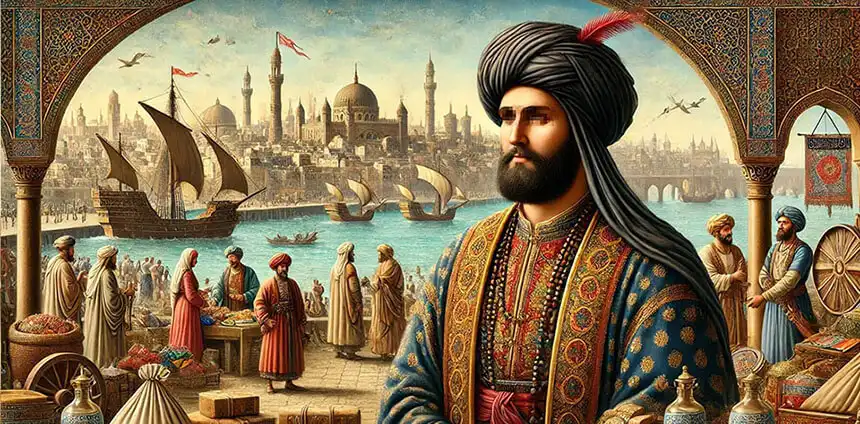
The Tang table was the most diverse in the pre-modern world. Wheat and millet in the …
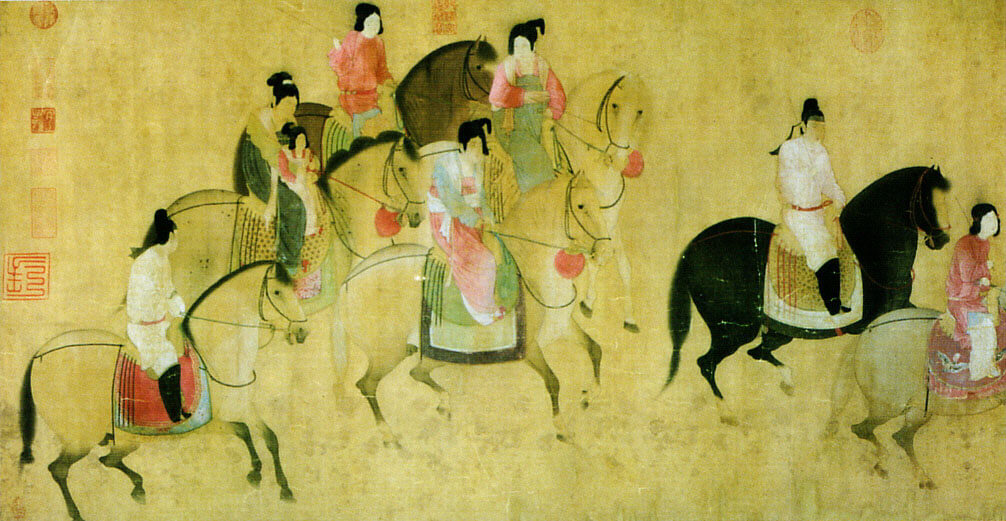
The Tang played as hard as it governed. Polo thundered across the grounds of the …
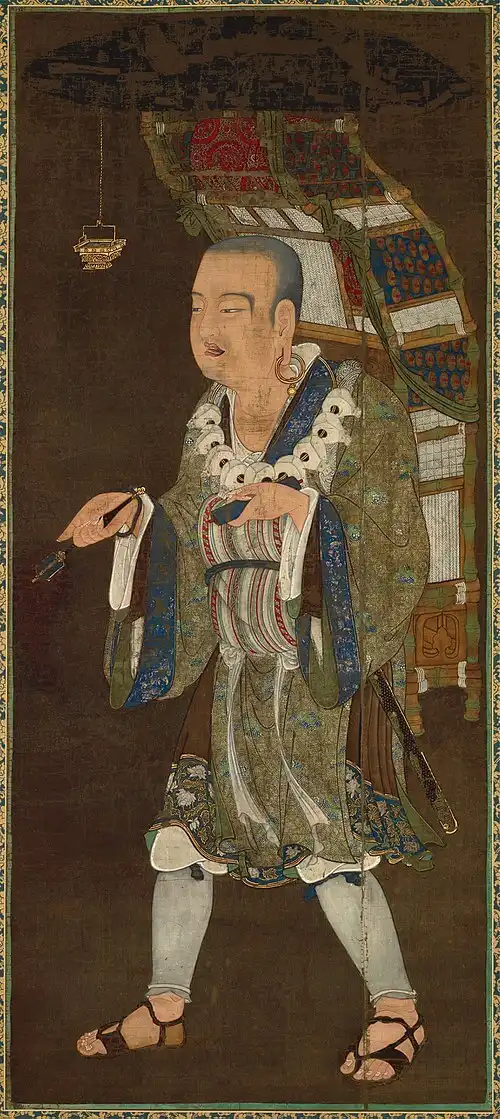
Tang society was the most stratified and the most fluid in the medieval world — a …