Wiki on Tang Dynasty
Knowledge Base on China Tang Dynasty
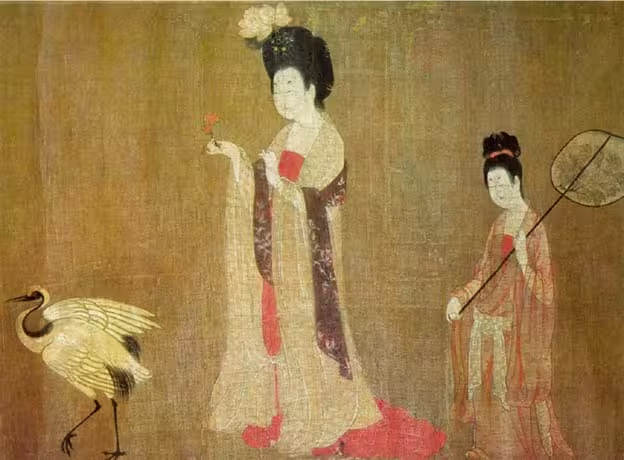
Chinese culture flourished and further matured during the Tang era. Historians generally regard the Tang as a high point in Chinese civilisation, and a golden age of cosmopolitan culture.
→ The An Lushan Rebellion (755–763)
The rebellion that the Tang subject An Lushan launched on December 16, 755 was the defining catastrophe of the dynasty and, many …
→ The Five Dynasties and Ten Kingdoms: The Long Interregnum (907–979)
When the Tang emperor Ai abdicated to the warlord Zhu Wen in 907, China entered fifty-three years of division conventionally called the …
→ The Han Dynasty: The Empire the Tang Measured Itself Against (206 BCE–220 CE)
Four centuries before the Tang, the Han dynasty built the imperial template that every later Chinese state claimed to inherit: a …
→ The Imperial System
The Tang monarchy sat at the center of a political cosmology older than the dynasty itself. The emperor ruled as Son of Heaven, …
→ The Legal System
The Tang produced the most influential legal code in East Asian history. The Tang Code, completed in 653 and revised with authoritative …
→ The Parthian Empire (247 BC – 224 AD)
The Parthian Empire — the Arsacid kingdom of Iran, Rome's great eastern rival for four centuries — stood on the Silk Road between the …
→ The Silk Road in the Tang Dynasty
The Silk Road was never a single road but a shifting lattice of caravan tracks, mountain passes, oasis markets, and sea lanes binding …
→ The Sui Dynasty: Unification and Overreach (581–618)
The Sui dynasty reunified China after nearly three centuries of division and built the Grand Canal, the examination system, and the …
→ The Western Turkic Khaganate (c. 603–659)
The Western Turkic Khaganate — the Onoq, the 'Ten Arrows' — was the western half of the great Turkic steppe empire, ruling from the …
→ The Xianbei
The Xianbei were the great nomadic confederation of the northeastern steppe, heirs of the Xiongnu, who dominated the Mongolian plateau …
→ The Xuanwu Gate Incident (626)
On the morning of July 2, 626, Li Shimin, second son of the founding emperor and Prince of Qin, ambushed and killed his elder brother, …
→ Trade & Maritime Commerce
The Tang was the most connected empire of the early medieval world. Along the Silk Road through its western protectorates, down the …
→ Travelers & Merchants
The Tang empire was the destination of the early medieval world's travelers — pilgrims, envoys, students, and above all merchants, who …
→ Visual Arts & Crafts
Tang painting, calligraphy and craft set the aesthetic grammar of East Asia. Court artists chronicled emperors and embassies, Wu …
→ Weapons & Armor
The Tang soldier went to war on horseback, behind a laced-lamellar cuirass, with a composite bow on his back and a long saber at his …
→ Western Liang (400–421)
Western Liang was a small dynastic state of the Sixteen Kingdoms period, founded in 400 by the Li family of Dunhuang and extinguished …
→ Woodblock Printing
Woodblock printing — carving a page of text or image in relief on a wooden board, inking the raised surface and pressing it to paper — …
→ Xuanzang
Xuanzang (602 – 5 February 664), born Chen Hui, was the Tang monk whose pilgrimage to India became the foundational journey of Chinese …
→ Yangtze River
The Yangtze — Chang Jiang, the Long River — is China's greatest waterway: 6,300 kilometers from the Tibetan plateau to the East China …
→ Yellow Sea
The Yellow Sea is the marginal sea between the Chinese mainland and the Korean Peninsula, named for the golden-yellow silt poured into …