Wiki on Tang Dynasty
Knowledge Base on China Tang Dynasty
Chinese culture flourished and further matured during the Tang era. Historians generally regard the Tang as a high point in Chinese civilisation, and a golden age of cosmopolitan culture.
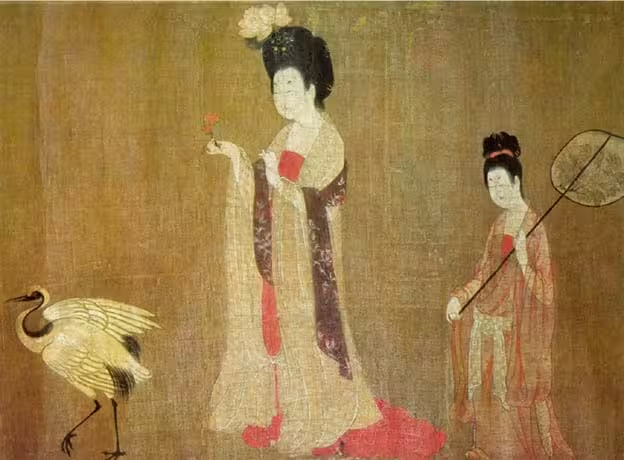
→ Fashion in the Tang Dynasty
Tang fashion was the most cosmopolitan costume in the medieval world — silk from China's own looms cut in steppe silhouettes, Persian …
→ Frontier Campaigns & Adversaries
Tang strategy was made at the edges of the map. For three centuries the dynasty measured itself against the peoples of the steppe, the …
→ Gao Xianzhi
Gao Xianzhi (died 24 January 756), known in Korean sources as Ko Sŏnji, was the greatest conqueror of the Tang's western expansion — a …
→ Gastronomy in the Tang Dynasty
The Tang table was the most diverse in the pre-modern world. Wheat and millet in the north, rice and fish in the south, mutton and …
→ Generals & Rebels
The Tang empire was won by generals, saved by generals, and finally destroyed by the soldiers it could not demobilize. This page …
→ Geography & Landmarks
The Tang empire stretched from the Korean frontier to the Pamirs, from the Mongolian steppe to the Annamite mountains. Its geography — …
→ Guo Ziyi
Guo Ziyi (697 – 9 July 781), posthumously Prince Zhongwu of Fenyang, was the general who saved the Tang dynasty — and the rarest figure …
→ Han Gan
Han Gan (c. 706–783) was the supreme horse painter of the Tang dynasty — the stable-hand prodigy whom Wang Wei discovered and the …
→ High Tang (712–755)
The High Tang (712–755) was the summit — the Kaiyuan golden age, the most celebrated four decades in all of Chinese history. Under …
→ Hou Junji
Hou Junji (died April 29, 643) was a general of the early Tang who rose with the dynasty, conquered Gaochang and campaigned against the …
→ Huai River
The Huai River, about 1,110 kilometers long, rises in Henan and flows east across the plain between the Yellow River and the Yangzi …
→ Huang Chao
Huang Chao (835 – 13 July 884) was the salt smuggler and failed examination candidate whose peasant rebellion nearly ended the Tang …
→ Interregnum: The Middle Tang (755–880)
The middle Tang (755–880) was the dynasty's long, contested convalescence after the wound of An Lushan. The empire survived — and more …
→ Jia Dan
Jia Dan (730 – 805), courtesy name Dunshi, Duke Yuanjing of Wei, was the Tang dynasty's great cartographer-geographer — a …
→ Jianzhen (Ganjin)
Jianzhen (688–763), revered in Japan as Ganjin, was the Tang monk who, after five failures and eleven years of shipwreck, blindness, …
→ Jiedushi: The Military Governor
The jiedushi (節度使), the Tang military governor, was the most consequential military office in Chinese history. Created in 711 to …
→ Laozi
Laozi — 'Old Master', traditionally identified as the sage Li Er — is the legendary author of the Dao de jing and the founding figure …
→ Late Tang: Stalemate, Rebellion, and Collapse (755–907)
The century and a half after the An Lushan rebellion was the long twilight of the Tang. Emperors of the late Tang faced mutinous …
→ Leisure in the Tang Dynasty
The Tang played as hard as it governed. Polo thundered across the grounds of the imperial palace; courtesans sang the new songs of the …
→ Leshan Giant Buddha
The Leshan Giant Buddha is a 71-meter-tall stone statue of Maitreya carved directly into a red sandstone cliff between 713 and 803, in …