Zhu Wen (Zhu Quanzhong)
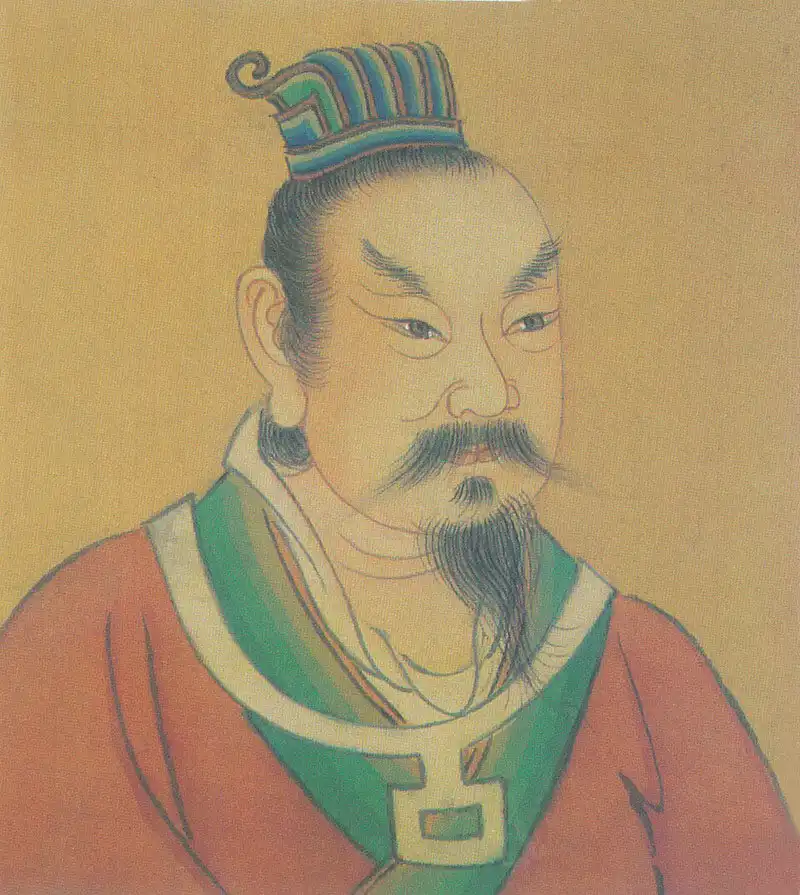
Zhu Wen (852 – 18 July 912) — later Zhu Quanzhong, then Emperor Taizu of Later Liang — was the warlord who ended the Tang dynasty. A peasant from the Songzhou salt country who joined Huang Chao's rebellion, betrayed it, and clawed his way to mastery of the Yellow River plain, he became the Tang court's master in 903, murdered two emperors, and took the throne in 907 to found the Later Liang, opening the Five Dynasties. The most hated man in Tang loyalist memory, he ruled the north for five brutal years before his own son murdered him.
From Salt Country to Rebellion
Zhu Wen was born in 852 to a impoverished family in Dangshan, on the Henan-Anhui border — the Old History of the Five Dynasties records a household so poor that his father died teaching in another family’s home. The salt smuggling economy of the eastern plain gave such boys their trade, and when Huang Chao’s rebellion swept through in 875–878, young Zhu Wen and his brother enlisted. He rose fast in Huang’s army — bold, capable, and lucky, he commanded a corps by the rebellion’s last years — and in 882, with Huang’s cause visibly failing, he betrayed his master and surrendered to the Tang, receiving pardon, command, and the new name Quanzhong, “wholly loyal.” The irony was not lost on his contemporaries and has not been lost since.
Building the North
For twenty years Zhu Wen fought his way up the Yellow River plain. From his base at Bianzhou — Kaifeng, on the Grand Canal, whose capture in 887 gave him the empire’s food artery — he destroyed rival warlords one by one: Qin Zongquan, the former Tang general turned cannibal-bandit; Shi Pu at Xuzhou; the Zhu brothers at Yunzhou; Li Keyong, the Shatuo Turkish champion of the dynasty, whom he nearly killed in an ambush at Shangyuan in 884 and fought to a standstill for decades. By the first years of the tenth century he controlled the most populous and productive region of China — the canal cities, the eastern granaries, the approaches to both capitals — and the Tang court, refugee in Chang’an between the eunuchs and the western warlords, increasingly ruled only where he permitted. In 903 he entered Chang’an, massacred the eunuch establishment root and branch, and took Emperor Zhaozong in hand. Two years later, fearing a rescue, he had Zhaozong murdered at Luoyang and installed the boy Li Zuo as Emperor Ai.
The End of the Tang
On 12 June 907, the abdication was staged with the full choreography of the ancient shanrang — portents, memorials, refusals overcome, the people said to demand it — and Zhu Wen took the throne as Emperor Taizu of the Great Liang. Tang loyalists refused him to the end and beyond: the Shatuo prince Li Cunxu, in the north, received the fugitive Tang officials and fought on under the Tang name, destroying the Later Liang in 923 and briefly “restoring” the dynasty as the Later Tang. Zhu Wen’s five years on the throne were a tyranny of informers and favorites; his cruelty was casual, his court a nest of suspicion, and his end followed the family pattern of the age. In 912, gravely ill, he dallied with his sons’ wives and let it be known he would pass the throne to an adopted son — and his third son, Zhu Yougui, murdered him in the palace on 18 July 912 and took the throne himself. The dynasty he founded lasted seventeen years, the first and not the worst of the Five Dynasties.
Historical Assessment
Tang loyalist historiography — above all Ouyang Xiu’s New History of the Five Dynasties, three centuries later — made Zhu Wen the dynasty’s devil: the servant who devoured his master, held up as the eternal proof that Heaven punishes the usurper, since neither his house nor his name prospered. Modern historians are less metaphysical and more impressed: he was, by the cruel standards of his age, an able and even visionary unifier — the first man since the An Lushan rebellion to hold the canal and the plain together, the builder of Kaifeng’s first imperial role, and the founder of the political-military system that the Later Zhou and the Song would complete. That he began as a salt smuggler, betrayed every master he served, and died by his son’s hand are facts his apologists cannot and do not deny; that none of it prevented his dynasty from being the necessary bridge out of the Tang is the harder truth that his loyalist enemies, of all people, ended by acknowledging — by living in the reunified empire his destruction of the Tang made possible.
References & Historical Sources
- Old History of the Five Dynasties (Jiu Wudai shi), annals of Taizu of Later Liang.
- New History of the Five Dynasties by Ouyang Xiu, annals of Taizu.
- Old Book of Tang, annals of Zhaozong and Ai.
- Zizhi Tongjian, volumes 255–268.