Li Linfu
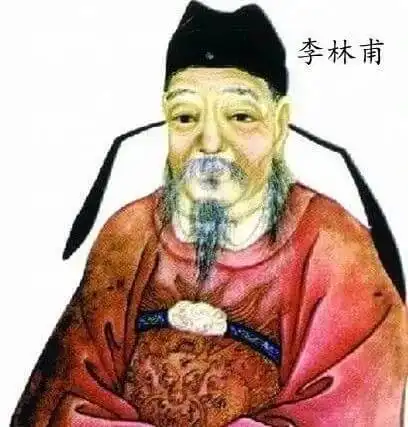
Li Linfu (died January 3, 753), Duke of Jin, was chancellor of the Tang empire for eighteen years (734–752) under Emperor Xuanzong — the longest tenure of the high Tang and one of the most consequential. Gifted, hardworking, endlessly suspicious, he built a machine of court politics that silenced criticism, destroyed rivals, and left Xuanzong's government without a single senior minister capable of managing a crisis. Two years after his death, the An Lushan rebellion vindicated every warning his enemies had made.
Ascent
Li Linfu was a cousin of the imperial house — his great-uncle had been a son of Gaozu — and began his career as an imperial guards officer, a background that marked him among the examination elite. He rose through palace service by a combination of administrative competence and perfect attunement to Xuanzong’s moods, serving in the household of the crown prince and in the central ministries. In 734 he entered the chancellorship as the junior partner of Zhang Jiuling, the era’s exemplar of upright remonstrance. The pairing was deliberate on Xuanzong’s part, and it was disastrous for Zhang: where Zhang corrected the emperor to his face, Li Linfu agreed with everything and never once displeased him. The New Book of Tang preserves the verdict of contemporaries in a pun that has stuck to him ever since — that he was a man of “honeyed words and a sword in his belly” (kou you mi, fu you jian 口有蜜,腹有劍), the origin of the Chinese idiom for a smiling traitor.
The Eighteen-Year Machine
Li Linfu methodically removed every rival who could threaten him. Zhang Jiuling was harried from office in 736 by a manufactured case; Li Shizhi, his next senior colleague, was hounded by legal pretexts until he died on the road to exile; and the sycophant Chen Xilie was promoted as a harmless placeholder. He purged the censors and intimidated the bureaucracy: officials learned that memorials critical of policy ended careers, and the channels of frank speech, the Zhenguan court’s proudest institution, fell silent. The Old Book of Tang records that no one at court dared discuss his conduct even in private. His grip extended beyond the capital: to deny the northeastern generals a patron at court, he advocated appointing non-Han professional soldiers — “barbarian generals,” in the idiom of the day — to the great frontier commands, arguing that they owed their careers solely to the throne. An Lushan, of Sogdian-Turkic origin, received three commands under this policy.
The Emperor’s Complicity
The standard verdict on Li Linfu must be qualified by a hard fact: Xuanzong wanted him. As the emperor aged past sixty into the long, pleasure-loving seclusion of his consort Yang Guifei’s orbit, Li Linfu was the instrument of his withdrawal — a chancellor who managed the government competently enough to keep the taxes flowing and never once demanded that the emperor work harder. The Zizhi Tongjian, no friend of Li’s, concedes his diligence and his administrative talent; what he destroyed was not the machine of government but its alarm system. When he died in office in January 753, Xuanzong promoted Yang Guozhong, the consort’s cousin — a man historians rank as worse and abler at nothing.
Historical Assessment
The post-rebellion historians who wrote Li Linfu’s biography needed no prompting to make him the villain of the piece: Xuanzong himself, after An Lushan’s armies were marching on the capitals, said of his late chancellor that he had been a master at destroying rivals and jealous of all talent, and that this was why no capable ministers remained when the crisis came. Modern scholarship adds nuance — his fiscal and legal administration was effective, and the “barbarian general” policy reflected real military logic — but the structure stands: the Kaiyuan golden age’s last eighteen years were governed by a man whose supreme skill was the silencing of everyone else. The rebellion that followed was the bill for that silence.
References & Historical Sources
- Old Book of Tang, biography of Li Linfu.
- New Book of Tang, biography of Li Linfu.
- Zizhi Tongjian, volumes 214–216.
- Xuanzong’s retrospective remarks recorded in the Old Book of Tang, annals of Xuanzong.