Huang Chao
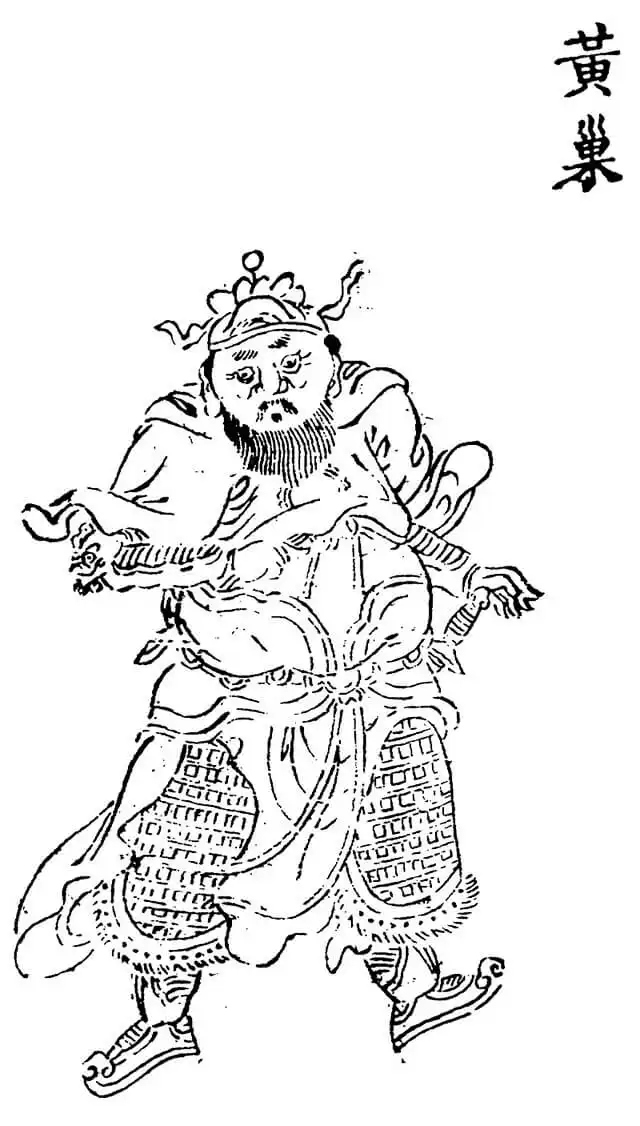
Huang Chao (835 – 13 July 884) was the salt smuggler and failed examination candidate whose peasant rebellion nearly ended the Tang dynasty a generation before it actually fell. His armies swept from the Yellow River to Guangzhou and back, captured and occupied both imperial capitals, and held the throne room of Chang'an for nearly three years before the warlords — among them a former subordinate named Zhu Wen — hunted him down. The Tang survived him; the dynasty's remaining twenty years were an epilogue he had already written.
The Examination Failure
Huang Chao came from a wealthy salt-dealing family in Caozhou, Shandong — private salt was a state monopoly, and his family were, in the law’s eyes, smugglers, rich and respectable locally but permanently barred from the careers the examinations offered. He sat the examinations repeatedly and failed repeatedly, and the frustration of the excluded literatus became, in his case, revolutionary. The Old Book of Tang preserves the legend with relish: his failed jinshi attempt produced the poem “Chrysanthemums” — “If I am the August Flower in full bloom, / all the blooms of Chang’an will fall beneath my feet” — a threat the capital would remember. By the mid-870s, when floods and famine devastated the eastern plain and the court’s response was heavier taxes, Huang joined the rising of another failed examinee-salt smuggler, Wang Xianzhi.
The Long March
When Wang Xianzhi accepted, and Huang rejected, an offer of amnesty in 878, the movement split and Huang took the larger part — by some accounts hundreds of thousands — south. His army’s passage was one of the great destructive migrations of Chinese history: through the Yangzi delta, over the Nanling passes into Lingnan, and into Guangzhou, the empire’s greatest port, which his forces stormed in 879. The sack of Guangzhou lasted weeks; the Arab geographer Abu Zayd, writing from the merchants’ testimony, records the killing of the port’s enormous foreign community — figures ranging from the tens of thousands upward — and the silencing of the maritime trade for a generation. Guangzhou’s wealth funded the next stage: turning north in the winter of 879–880, Huang’s army moved up the Xiang and Han rivers, crossed the Yangzi, and in December 880 broke through the last imperial defenses on the Wei River plain. On 5 January 881, Chang’an — abandoned by Emperor Xizong, who fled to Chengdu — opened its gates. Huang Chao entered as conqueror.
The Qi Emperor
Huang proclaimed the Qi dynasty and took the throne of the Tang emperors; the Old Book of Tang’s account of his coronation notes that Tang officials who refused to serve were killed by the thousands, and that the capital’s population starved in the siege conditions that followed. But occupation was his undoing. He held the city while the warlords — the Shatuo Turkish general Li Keyong above all, summoned from the frontier — contracted around him; food ran out; and in 883 his armies, defeated in a series of battles outside the walls, abandoned Chang’an, which they set ablaze. The pursuit was pitiless: through Henan into Shandong, his subordinates defecting one by one to the Tang — the most consequential defector being Zhu Wen, who would end the dynasty in 907. In the summer of 884, cornered at Langhu Valley in Taishan, Huang was killed on 13 July; the accounts differ on the hand that struck him — his nephew and heir Lin Yan, by the standard version, bribed at the last, or his own remaining followers. His family and the remnant of the court of Qi were annihilated.
Historical Assessment
The rebellion’s arithmetic was the Tang’s death warrant, whoever held the pen. The census and fiscal records of the east were destroyed beyond recovery; the great clans of the medieval aristocracy, which had staffed the empire for five centuries, were physically exterminated in the sack of the capitals — the New Book of Tang’s tables of the great families end, visibly, in the 880s; the imperial guard system collapsed; and the warlords who defeated Huang took, as their price, the provinces they had fought in. None of this was reversible, and the dynasty’s last emperors reigned as tenants of the men who had saved it. Huang Chao himself the historians could not forgive — his is the standard biography of the bandit-emperor, cruel, literate, and doomed — but the class he sprang from, the examination-excluded provincials who made the salt monopolies’ violence pay, inherited the age: the Five Dynasties and the Song were built by their kind. The chrysanthemum bloomed, as promised, and all the blooms of Chang’an fell.
References & Historical Sources
- Old Book of Tang, annals of Xizong; biographies of Huang Chao and Li Keyong.
- New Book of Tang, annals of Xizong.
- Zizhi Tongjian, volumes 252–256.
- Abu Zayd al-Sirafi, Accounts of China and India, on the sack of Guangzhou.
- Robert M. Somers, “The End of the T’ang” (Cambridge History of China, vol. 3).