Gao Xianzhi
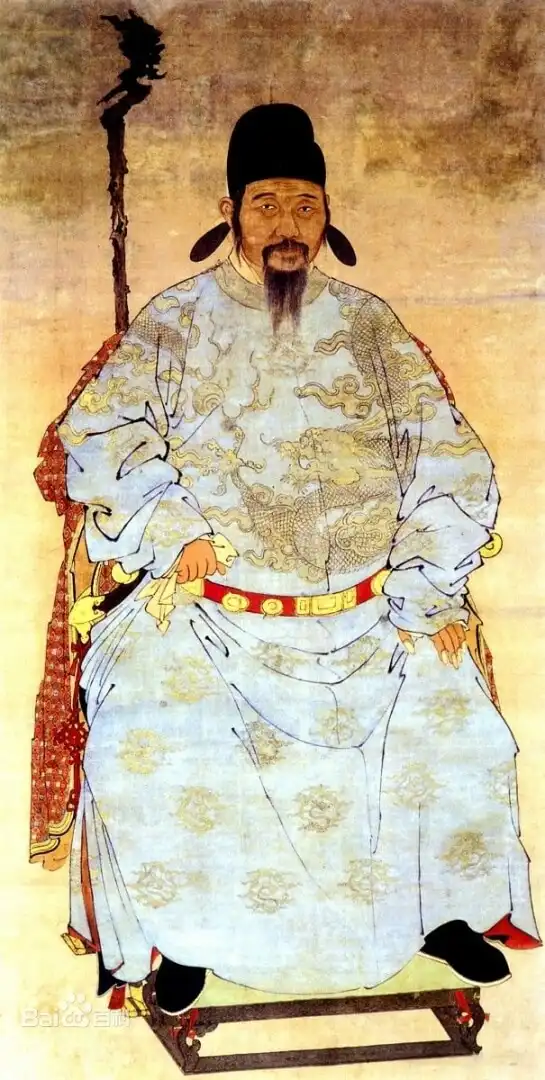
Gao Xianzhi (died 24 January 756), known in Korean sources as Ko Sŏnji, was the greatest conqueror of the Tang's western expansion — a general of Goguryeo descent who carried Chinese armies over the Pamirs to the banks of the Talas River, farther west than any Chinese commander before or since. His reward was to be executed at the height of the An Lushan rebellion, on the word of a eunuch, as the passes he died defending fell to the rebels. His career measures both the reach and the cruelty of the Tang military world.
The Western Campaigns
Gao Xianzhi inherited a frontier name — his father Gao Shezhi had served the Tang as a general in the Anxi garrisons — and made it immortal. As deputy and then commander in the Anxi Protectorate, headquarters at Qiuci (Kucha), he spent the 740s extending Tang power across the Pamirs with a speed and boldness that read like epic. In 747 he crossed the highest battleground in Chinese military history: the icy passes of the Pamirs — over the “Onion Mountains,” through avalanches that buried a third of his column — to surprise and shatter the Tibetan-backed Little Bolü (Gilgit), dragging its king back to Chang’an in chains and reopening the southern Silk Road. In 750 he crossed again, against the Ferghana valley state of Shiguo (Tashkent), which had ambushed a Tang caravan; he took the city, executed its king, and loaded the booty — reportedly vast — onto the army’s return. The steppe consequences of that sack came the following year, when the king’s son appealed to the Abbasid caliphate, and the armies of east and west collided at the Talas River.
Talas
The Battle of Talas (July 751) was less a defeat than a contact. Gao Xianzhi’s corps of perhaps 20,000–30,000 met the Abbasid army of Ziyad ibn Salih across the river near Taraz; the battle seesawed until the Karluk auxiliaries on the Tang flank turned, by prearrangement or opportunity, and the Tang army broke. Gao rallied the remnants over the mountains back to Qiuci — the retreat itself was a feat that preserved the protectorate. The strategic consequences were long-term, not immediate: the Anxi garrisons held for another decade, and the famous story that paper-making prisoners at Talas carried the craft to Samarkand is likely legend. What Talas actually ended was the possibility of further Tang expansion westward — and it destroyed, through the court’s resentment of the Ferghana campaign’s unauthorized sack, Gao’s own credit at court.
Tong Pass and Execution
In 755 the world ended instead in the east. Gao Xianzhi was summoned from the west to command the field armies blocking the rebels’ road to the capitals, with the veteran Feng Changqing as his second. His strategy at Tong Pass was correct and unglamorous: hold the pass, let the overstretched rebels rot. The court — panicked, and armed with the favorite Yang Guozhong’s assurances that victory required only a push — ordered him out to battle; he obeyed, was defeated, and fell back to the pass. There the palace eunuch Bian Lingcheng, whom he had refused to bribe, arrived as the emperor’s inspector, and accused the two generals of cowardice and embezzlement. On 24 January 756, on Bian’s report and without trial, the emperor ordered Gao Xianzhi and Feng Changqing beheaded before the army at Tong Pass. The Old Book of Tang’s account of the scene is one of the most quoted passages of the rebellion: Feng Changqing, already dying of wounds, went to his death protesting his loyalty, and Gao Xianzhi, dragged to the block, cried out to the assembled soldiers that he had retreated only when the court ordered it — and called down the injustice on the heads of the eunuchs. The army wept. Weeks later, the pass the dead men had held fell to An Lushan, and Chang’an was lost.
Historical Assessment
Gao Xianzhi’s biography is the Tang military tragedy in one file: a foreign-origin commander of genius, trusted with the farthest conquests and then destroyed, at the moment of the dynasty’s greatest need, by the court’s paranoia and a eunuch’s revenge. The Tang lost at Tong Pass not a battle but its best defender — and contemporaries knew it; the histories’ account of the soldiers’ tears at the execution ground became a byword for throwing away the sword to spite the hand. Modern historians rank him with Li Jing and Guo Ziyi among the dynasty’s supreme soldiers, and his Pamir campaigns remain among the most astonishing feats of logistics in the history of Chinese arms.
References & Historical Sources
- Old Book of Tang, biography of Gao Xianzhi.
- New Book of Tang, biography of Gao Xianzhi; treatise on the western regions.
- Zizhi Tongjian, volumes 215–217.
- Christopher I. Beckwith, The Tibetan Empire in Central Asia (1987), on the western campaigns.