Taoism in the Tang Dynasty
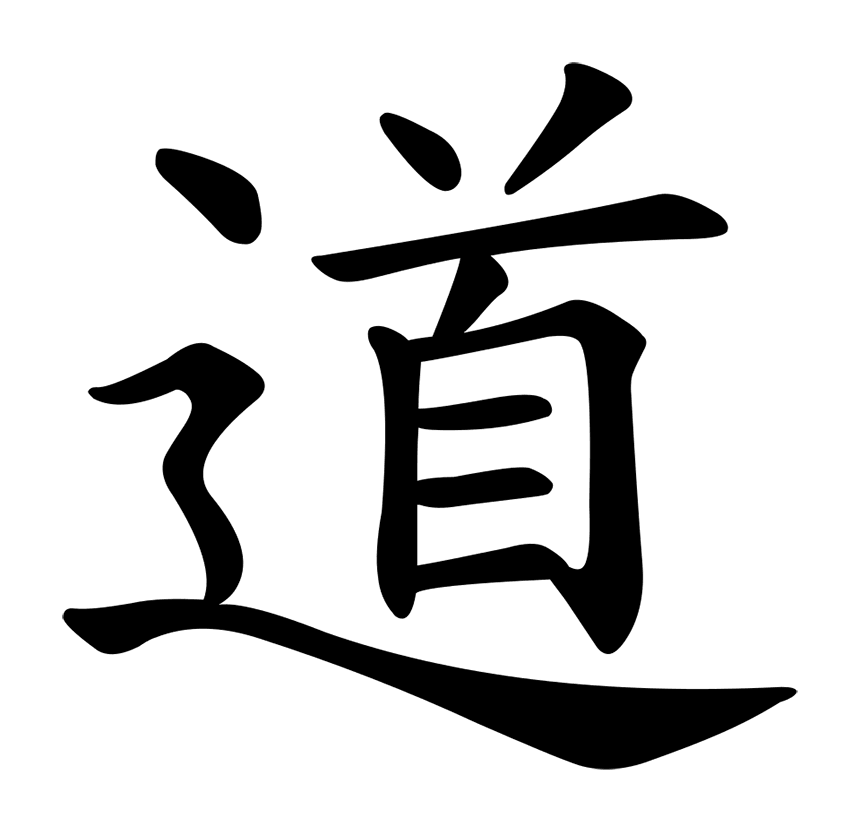
Taoism was the Tang dynasty's state religion by design. The imperial house claimed descent from Laozi, the Dao de jing entered the civil examinations, and emperors from Gaozu to Xuanzong patronized temples, priestly lineages, and the great canon with a zeal part devotion, part politics. This page traces how the Tang used Taoism to legitimate its rule, the faith's philosophical and religious depths, its uneasy relationship with Buddhism, and its lasting mark on Chinese civilization.
The Tang Claim: A Dynasty of Laozi’s Blood
The Tang connection to Taoism began at the founding. In 666 Emperor Gaozong, at the urging of court Taoists, proclaimed Laozi — the semi-legendary sage Li Er 李耳, author of the Dao de jing — an imperial ancestor, canonizing him as the “Supreme Mysterious Emperor” (Taishang Xuanyuan Huangdi) and building a temple at Laozi’s traditional home of Bozhou. The genealogy was implausible on its face — the Lis of Longxi were a northwestern military aristocracy of mixed Sino-Tuoba blood — but it served three purposes at once: it gave the new dynasty an indigenous sacred lineage against the foreignness of Buddhism, it flattered a founding family conscious of its frontier origins, and it answered the Sui’s promotion of Buddhism with a rival orthodoxy. The claim was maintained with increasing elaboration for two centuries.
Imperial Patronage and the Dao de jing in the Examinations
Under Xuanzong (r. 712–756) Taoism reached its dynastic zenith. The emperor annotated the Dao de jing personally, had his commentary carved on stone steles across the empire, and ordered the text included among the examination subjects; a candidate in 741 could be examined on Laozi as readily as on the Confucian classics. Xuanzong founded the Chongxuan Academy for the study of Taoist texts, commissioned the court Taoist Sima Chengzhen and his school for liturgical and meditative reform, and in 748 erected a national network of temples dedicated to the “Supreme Mysterious Emperor” — every prefecture receiving a Laozi shrine with state endowment. The princesses Jinxian and Yuzhen took Taoist vows at court, and the emperor’s own sister and daughters staffing temple establishments made Taoist ordination a recognized career for aristocratic women. The Old Book of Tang notes dryly that under Xuanzong “Taoist priests and priestesses filled the capital.”
Philosophy and Practice in Tang Life
Beyond court sponsorship, Taoism permeated Tang culture. The philosophical core — the Dao de jing’s teaching of wuwei (non-forcing action), naturalness (ziran), and the soft overcoming the hard; and the Zhuangzi’s relativism, humor, and vision of spiritual freedom — shaped Tang aesthetics from poetry to landscape painting: the poets Li Bai, whose “Asking the Moon with a Cup in Hand” is Taoist spontaneity distilled into verse, and Wang Wei, whose Buddhist-Taoist retreat poems defined the recluse ideal, both drank from this well. Religious Taoism offered a parallel universe of practice: meditation and inner alchemy (neidan), liturgy and exorcism, the quest for longevity through diet, breath control, and elixirs — a quest that killed several emperors, most notoriously the late-dynasty sovereigns who died of elixir poisoning chronicled in the New Book of Tang’s treatise on the imperial family. Tang Taoism also produced a major doctrinal synthesis: the revelation movements of the early Tang, building on the Lingbao and Shangqing scriptures of earlier centuries, culminated in the compilation of the first great Daoist canon (the Kaiyuan Canon of c. 730), ancestor of the Ming-era Daozang.
Taoism, Buddhism, and the Court’s Balance
The Tang throne never chose between the Three Teachings; it orchestrated them. Early Tang emperors patronized Buddhism lavishly — Taizong sponsored the pilgrim-translator Xuanzang’s great project at Chang’an, whose Sanskrit canon was rendered into Chinese under imperial subsidy through the 650s and 660s — while simultaneously elevating Taoism, and the court staged public debates in which Confucians, Taoists, and Buddhists contested doctrine before the throne, each tradition’s partisans hoping for edictal favor. The rivalry had hard edges: Taoist polemicists attacked Buddhism as a foreign faith sapping the people’s strength, and Buddhist apologists answered with the Huahu jing, a forged scripture claiming Laozi had traveled west and become the Buddha — a provocation the Taoists never forgave. The state’s repeated fiscal suppressions of the Buddhist church (the great persecution of 845 under Emperor Wuzong destroyed 4,600 monasteries and forced 260,000 monks and nuns back to lay life) were driven by economic calculation, but Taoist advisers at Wuzong’s court supplied the ideological ammunition.
Historical Assessment
Tang Taoism’s legacy is double. Politically, the Li family’s patronage failed in its deepest purpose — the dynasty fell despite its divine ancestor — but the institutional template it set (state temples, canonical scholarship, examination status) anchored Taoism as one of China’s permanent Three Teachings. Culturally, the Tang gave Taoism its classical expression in art and verse: the image of the Taoist immortal drifting through mist above mountain rivers is, in large part, a Tang image. And the dynasty’s own fate became grist for the Taoist mill: the Old Book of Tang, closing its account of the elixir deaths of the late emperors, reads as an unwitting parable of the Dao de jing’s warning that the pursuit of forceful life exhausts life.
References & Historical Sources
- Old Book of Tang, annals of Gaozong and Xuanzong; treatise on ritual.
- New Book of Tang, treatise on the imperial family (for elixir deaths); treatise on religion.
- Zizhi Tongjian, volumes 211 (666 canonization), 214–216 (Xuanzong’s Taoist policies), 248 (the 845 suppression).
- Dao de jing (with Xuanzong’s commentary); Livia Kohn, Daoism and Chinese Culture (2001).
- Isabelle Robinet, Taoism: Growth of a Religion (1997).