Taishang Huang: The Retired Emperor in Tang Politics
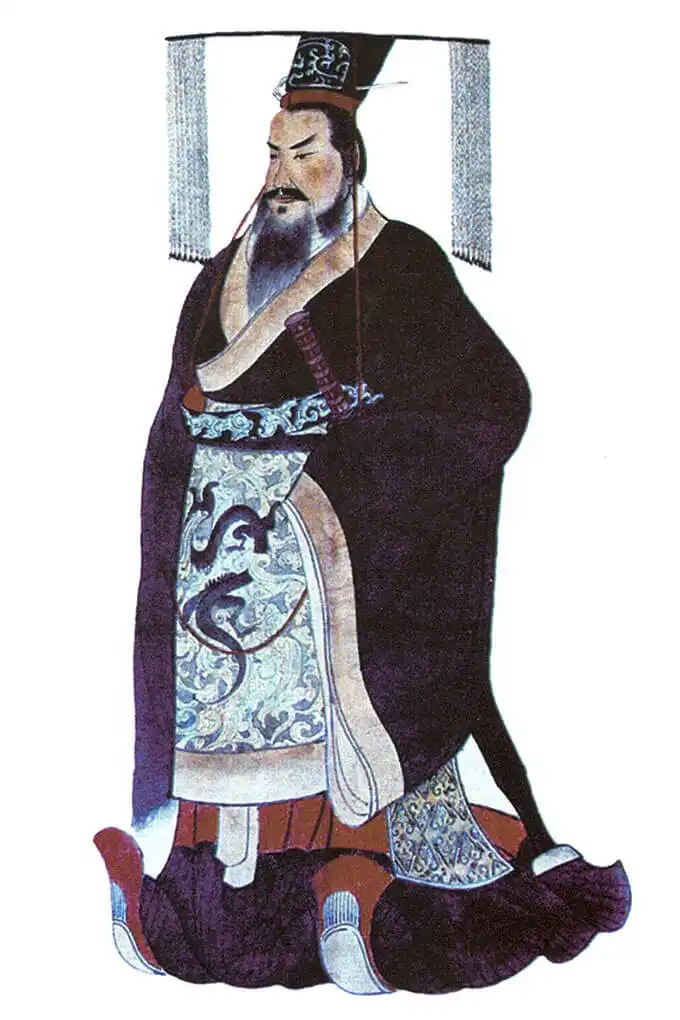
A Taishang Huang, or 'Supreme Emperor', was a living former sovereign who had, at least formally, handed the throne to a successor. The honorific began as a posthumous courtesy and became a political institution — and in the Tang it became something more dangerous: a mechanism by which deposed or abdicated emperors, empress dowagers, and military strongmen governed from behind the throne. The Tang experience of the title is a case study in how Chinese institutions bent to accommodate power that would not retire.
Origins of the Title
The term Taishang Huangdi first appears under Qin Shi Huang, the First Emperor, who bestowed it posthumously upon his father, King Zhuangxiang — “Supreme Emperor” as a filial honor for a man who had never reigned. Under the Han the title acquired a living meaning: Liu Bang’s father, Liu Taigong, received it as the emperor’s father. Its political content was fixed in the fourth century, when several Jin dynasty emperors, deposed or cornered by powerful clans, were retired as Taishang Huang while the real power moved elsewhere. The formula was now established: the title marked a man pushed up and out — honored, untouchable, and powerless, unless he could make himself otherwise.
The Tang Record
The Tang produced more living Taishang Huangs than any dynasty before it, and in no case was the retirement voluntary in the modern sense. In 626, after the Xuanwu Gate coup, Emperor Gaozu yielded the throne to Li Shimin and spent his last nine years as Taishang Huang — a dignified but unmistakably enforced withdrawal; the Old Book of Tang, written in the dynasty his son built, preserves the decorous fiction of willing abdication. In 684, shortly after Gaozong’s death, Empress Wu deposed her son Emperor Zhongzong after only six weeks on the throne, reduced him to the princely title of Luling Wang, and installed his younger brother as Emperor Ruizong — a puppet whom she herself displaced in 690 when she took the throne as emperor of her own Zhou dynasty. When finally restored by coup in 705, Zhongzong’s position had been so battered that his second reign ended in 710 with his alleged poisoning by his wife Empress Wei. Emperor Ruizong, who took the throne in 710 after his son Li Longji’s coup killed Empress Wei, abdicated in 712 in favor of that same son, Xuanzong, and lived on as Taishang Huang until 716 — the one Tang case approaching a genuine, managed transfer, and even here Ruizong initially retained control of the senior staff appointments until Xuanzong’s allies forced full retirement after Princess Taiping’s fall in 713.
Abdication as an Instrument of Usurpation
The darkest use of the title came at the dynasty’s end. In 900 the eunuch Liu Jishu deposed the mentally unstable Emperor Zhaozong and installed a child, styling Zhaozong Taishang Huang — a formula instantly recognizable to every literate official as the first move in the usurper’s handbook, a device as old as the ancient abdications of legend. When the coup collapsed within months, the eunuchs were killed and Zhaozong restored. In 904 the warlord Zhu Wen had Zhaozong murdered and set his son on the throne as Emperor Ai; in 907 Ai “abdicated” to Zhu Wen, the last formal act of the Tang, and was then poisoned anyway. The 227 years between Gaozu’s 626 abdication and Ai’s 907 abdication form a complete arc: the title that began as a son’s honor to a father ended as a murderer’s stage prop.
Why the Institution Mattered
The Taishang Huang solved a real problem in a monarchy without fixed retirement: it gave defeated sovereigns a face-saving exit that spared the victor the odium of regicide, while the former emperor’s survival — living proof of the new ruler’s filial restraint — lent the new reign moral cover. Its Tang history shows the limits of that solution: Gaozu withdrew and endured; Ruizong half-withdrew and had to be pruned back; Zhaozong was twice the prop of other men’s coups; and Emperor Ai’s abdication could not save his life. The institution survived into the Song — where the Gaozong–Xiaozong arrangement (Gaozong retired in 1162 but kept real power until his death in 1187) again showed the title’s essential ambiguity — but after the Tang the formula rarely deceived anyone. The throne had room for only one pair of hands; the title of Supreme Emperor merely recorded where the second pair had been laid down, or had been forced to lay them down.
References & Historical Sources
- Old Book of Tang, annals of Gaozu, Ruizong, Zhaozong, and Ai; biographies of Empress Wu.
- New Book of Tang, annals and the monograph on the imperial clan.
- Zizhi Tongjian, volumes 191, 210–212, 262–265.
- Book of Jin (Jin shu), for the title’s fourth-century precedents.