The Legal System
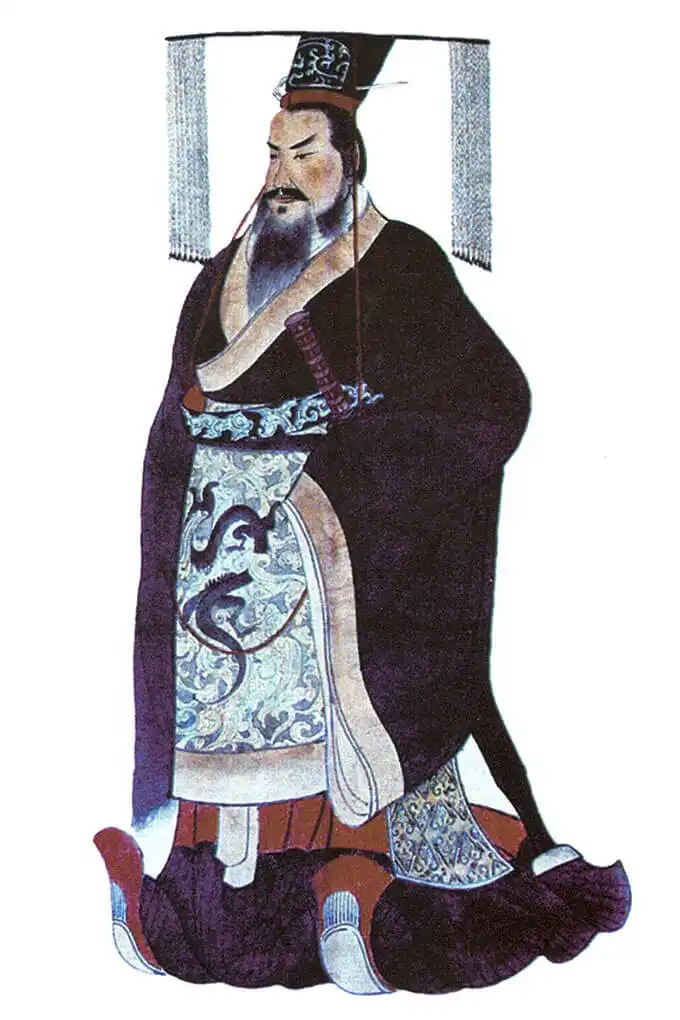
The Tang produced the most influential legal code in East Asian history. The Tang Code, completed in 653 and revised with authoritative commentary in 737, became the template for the codes of the Song dynasty, Japan's Taihō and Yōrō codes, Korea's Goryeo code, and Vietnam's Lê code — a legal family that governed half of humanity for more than a millennium. Its logic, procedure, and philosophy illuminate not only how the Tang state kept order, but how it understood justice itself.
The Tang Code and Its Structure
The Tang Code (Tang lü shuyi, “The Tang Laws, with Commentary”) contains 502 articles organized in twelve sections. Its architecture separates the law into two great layers: lü, the primary statutes defining offenses and punishments, and ling, the supplementary ordinances (on administration, ritual, and institutions), together with shi (codified precedents) and ge (regulations) — the so-called fourfold form of Tang law. Five punishments scale all penalties: beating with the light stick (ten to fifty blows), beating with the heavy stick (sixty to one hundred), penal servitude (one to three years), exile (to 1,000–3,000 li), and death (by strangulation or decapitation). The graduated scale — no mutilations, a deliberate break with earlier practice — was a hallmark of the Tang legislators’ relative humanism, though flogging and servitude remained brutal in fact.
The Ten Abominations and the Five Relationships
At the code’s moral core stand the Ten Abominations (shi’e), the crimes considered injuries against the cosmic order itself: plotting rebellion, plotting great sedition, plotting treason, contumacy, depravity, great irreverence, lack of filial piety, discord, unrighteousness, and incest. These were in principle unpardonable, and their enumeration shows what the state most feared — disloyalty to ruler first, but immediately after, breaches of the family hierarchy. The code operationalized Confucian ethics with famous precision: for ordinary assault, penalties rose or fell with the relative status of victim and offender, and crimes within the family — a son striking a parent, a wife striking a husband’s parents — carried automatic escalation to the heaviest grades, while a parent’s killing of a disobedient son might be treated with striking leniency. Scholars have described the Tang Code as Confucian ethics translated into Legalist machinery, and the description is apt.
Courts and Procedure
Judicial administration ran through three channels. Local cases began with the county magistrate and could be appealed to the prefect, then to the Ministry of Justice (Xingbu), which reviewed serious sentences from across the empire. Capital cases required review by the emperor himself before execution — the annual “report and review” (jiaoqiu) system — and the code explicitly mandated reconsideration even of confessed capital defendants, on the principle memorialized in the Zhenguan-era discussions that the state’s power over life must be exercised with fear and trembling. Death sentences could be pronounced only after the autumn assizes, allowing the seasonal logic of Heaven’s summer growth to delay the taking of life. The Censorate supervised the entire judiciary, and officials who judged wrongly — acquitting the guilty or convicting the innocent — were themselves liable under articles of the code.
Law in Practice
Between the code and the courtroom stood the usual realities: clerks, brokers, money, and local custom. Tang legal documents recovered from Dunhuang and Turfan show the system in operation — contracts, loan agreements, land deeds, and lawsuits resolved at county level — and reveal a population remarkably litigious and legally literate, with women among the contracting parties. Enforcement of the great status distinctions of the code was uneven in frontier society, where Sogdian, Turkic, and Chinese communities lived under overlapping jurisdictions; the statutes on “conflict of laws” (huahun) directed cases between persons of different communities judged by their own laws, an unusually sophisticated provision for the seventh century.
Legacy
The Tang Code’s afterlife was longer than the dynasty’s. Its text traveled with monks, envoys, and conquerors: to Japan, where the Yōrō Code of 718 reproduced its structure almost article for article; to Korea and Vietnam; and forward in time to the Ming and Qing codes, which retained its Twelve-Section skeleton and its Ten Abominations. When modern scholars speak of the “East Asian legal family,” they mean, in essence, the Tang Code’s descendants.
References & Historical Sources
- Tang Code (Tang lü shuyi); English translation by Wallace Johnson, The T’ang Code, 2 vols. (1979–1997).
- Old Book of Tang and New Book of Tang, treatise on penal law (Xingfa zhi).
- Shiga Shūzō, “Criminal Procedure in the T’ang and Sung” (1966).
- Denis Twitchett, “Chinese Social History from the Seventh to the Tenth Centuries: The Tunhuang Documents and Their Implications.”