Wiki on Tang Dynasty
Knowledge Base on China Tang Dynasty
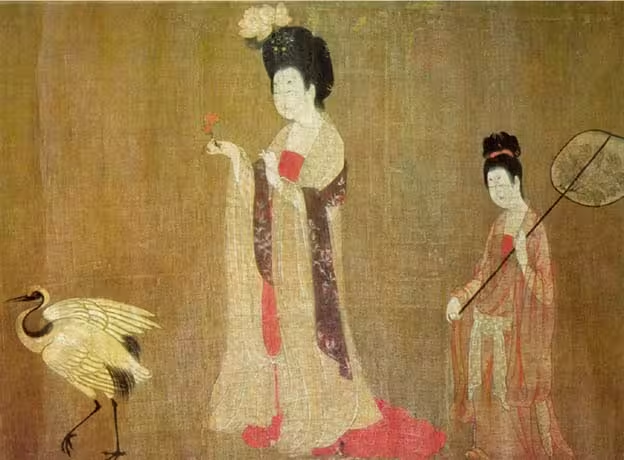
Chinese culture flourished and further matured during the Tang era. Historians generally regard the Tang as a high point in Chinese civilisation, and a golden age of cosmopolitan culture.
→ Kaiyuan Za Bao: The Court Bulletin
Overview
Circulated during the prosperous Kaiyuan reign (713–741) of Emperor Xuanzong, the Kaiyuan Za Bao (开元杂报, “Miscellaneous …
→ Lu Yu and The Classic of Tea
Overview
Written by the Tang scholar-recluse Lu Yu (陆羽, 733–804) in the second half of the eighth century, The Classic of Tea (Cha Jing …
→ Science & Engineering
Astronomy and the Meridian Survey
In imperial China, accurate calendar-making (Lifa, 历法) was a vital pillar of dynastic legitimacy, …
→ The Diamond Sutra (868 CE)
Overview
Dated May 11, 868 CE (the fifteenth day of the fourth lunar month in the ninth year of the Xiantong era), the Tang-dynasty …
→ The Grand Canal & Tang Caoyun
Overview
Stretching over 2,000 kilometers from the southern port of Hangzhou across the Yangtze and Huai rivers to the northern plains …
→ The Imperial Examinations
Breaking the Aristocratic Monopoly
When the Tang dynasty was founded in 618, high government office was overwhelmingly dominated by …
→ The Tang Code
Codification and the 653 Commentary
The Tang Code (Tanglü Shuyi, 唐律疏议) is the oldest surviving complete legal code in Chinese history …
→ Three Departments & Six Ministries
Overview
The Three Departments and Six Ministries (Sansheng Liubu, 三省六部) formed the central administrative backbone of the Tang empire. …
→ An Lushan
An Lushan (703 – 29 January 757) was the Sogdian-Turkic frontier general whose rebellion in 755 came within sight of destroying the …
→ Architecture & Engineering
Tang builders inherited the Sui blueprint and perfected it: two planned imperial capitals laid out on vast grids, palace complexes …
→ Central & Local Administration
The Tang government was a pyramid: three departments and six ministries in the capital, ten (later more) inspection circuits in the …
→ Chancellors & Statesmen
The Tang chancellorship was not a single office but a circle of trust at the top of government — the senior men of the Secretariat, …
→ Chang'an
Chang'an was the principal capital of the Tang dynasty and, at its height, the largest, richest and most cosmopolitan city on earth. …
→ Dou Jiande
Dou Jiande (573 – 3 August 621) was the most admired of the rebel leaders who rose against the collapsing Sui dynasty. A farmer-soldier …
→ Duchess Dugu (Empress Yuanzhen)
Lady Dugu (544 – c. 590s), Duchess of Tang and posthumously Empress Yuanzhen, never saw the dynasty her descendants founded. As wife of …
→ Early Tang (626–712)
The early Tang (626–712) carried the dynasty from its bloody founding to the threshold of its golden age. It opens with a palace coup — …
→ Economic Systems
The Tang economy grew from a restored agrarian order into the most commercialized economy in the world, then broke apart and …
→ Emperors & Royalty
The Tang imperial family produced not only twenty emperors but a remarkable supporting cast: crown princes who never reigned, …
→ Empress Wei
Empress Wei (died 21 July 710) was the second wife of Emperor Zhongzong of Tang and, for the five years of his restored reign …
→ Famous Battles
The Tang dynasty's destiny was settled in a handful of battles — sudden, violent encounters where the empire's future turned on a …