Personal Name:
Li Xian 李显
Reign: 684 - 684 (None (continued Hongdao of Gaozong))
Zhongzong 中宗
Temple name
Emperor Xiaohe 孝和皇帝
Posthumous name
The Legacy
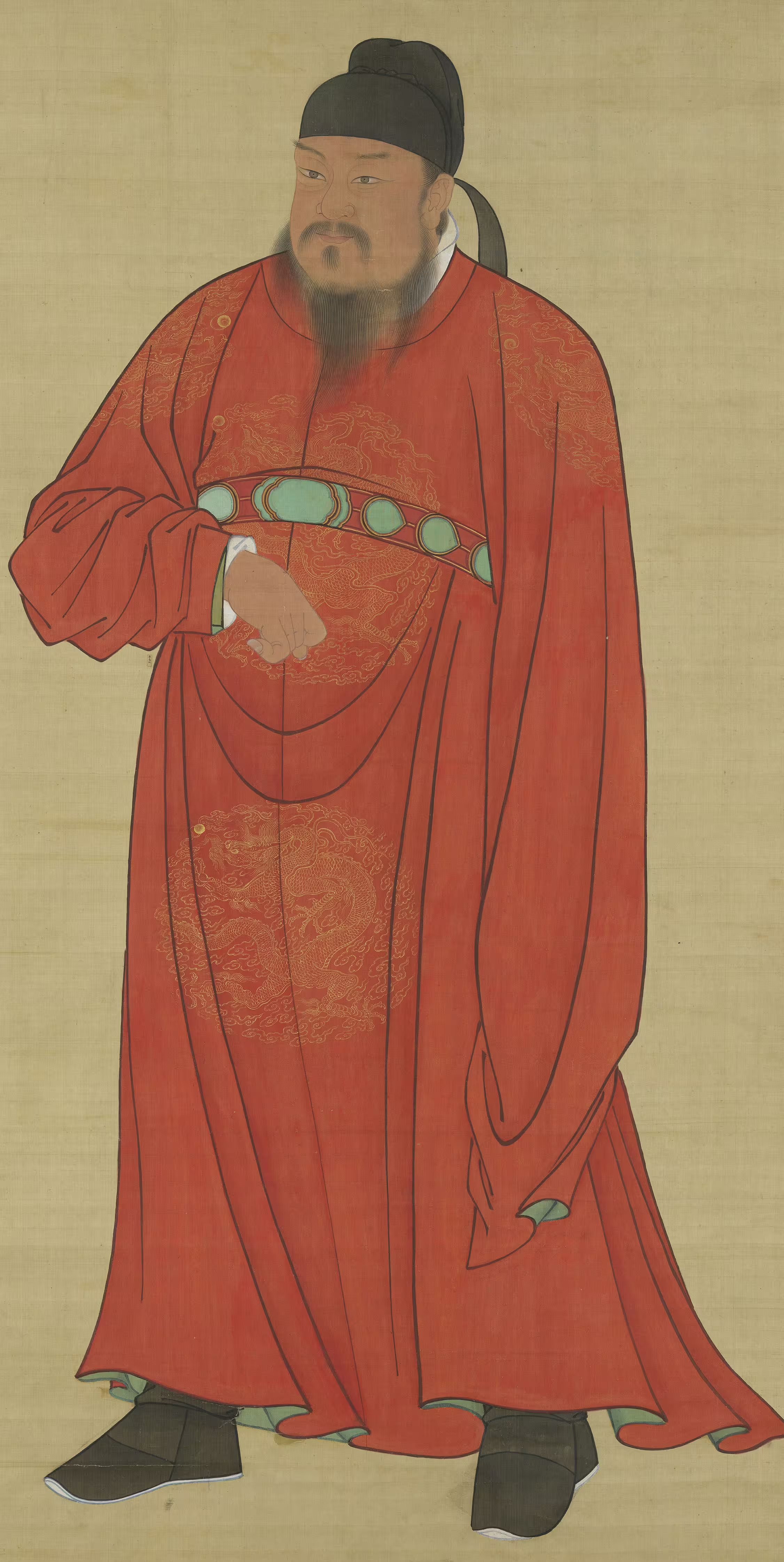
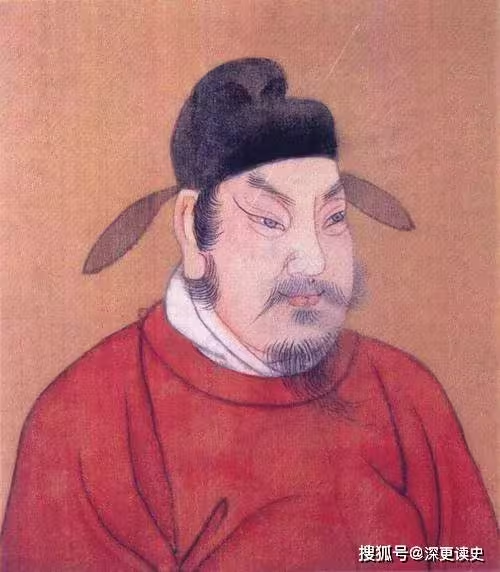
Emperor Zhongzong of Tang (26 November 656 – 3 July 710), personal name Li Xian, born Li Zhe, was the fourth emperor of the Tang dynasty — and, uniquely, its twice-crowned one. His first reign lasted some fifty-five days in 684 before his mother Wu Zetian deposed him; his second, restored by the coup of 705, lasted five years and ended, almost certainly, in poison. He is remembered less for what he did than for what he failed to prevent: the dominance of his wife Empress Wei and his daughter Princess Anle, whose ambitions reignited the very pattern — empress usurpation — that the restoration of 705 had just extinguished.
The historians’ verdict is severe and essentially agreed. The Zizhi Tongjian, echoing the Tang histories, paints a well-meaning but boneless sovereign whose court became a bazaar of offices and whose family tragedy replayed on a national stage. Yet his restoration mattered: the Shenlong coup ended the Zhou interregnum, brought the capital and court rituals back to Tang forms, and returned the dynasty’s name. He was, in the cold accounting of institutions, the hinge on which Tang legitimacy swung back into place — even as his household prepared the next collapse.
Reign & Achievements
The restoration of 705. On 20 February 705 Chancellor Zhang Jianzhi, with Cui Xuanwei and three colleagues, seized the gates of Wu Zetian’s residence with the help of the palace guard commander Li Duozuo. The Zhang brothers — Wu Zetian’s favorites and the focus of every faction’s fear — were beheaded in the corridor; the eighty-year-old empress was presented with an abdication she could not refuse. On 23 February Zhongzong reascended the throne. The dynasty of Zhou was extinguished, the calendar and rites of Tang restored, and the exiled and proscribed families of the Li clan rehabilitated in waves through 706. Zhongzong’s achievement is negative but real: he presided, peacefully and without vengeful purges, over the re-legitimation of the Tang.
Return to Chang’an and burial of the dead. In 706 the court returned from Luoyang to Chang’an, re-establishing the western capital; Wu Zetian, dying in December 705, was interred at Qianling beside Gaozong with imperial honors — a settlement of the Zhou legacy as pragmatic as it was symbolically complete. Reburials and posthumous honors were extended to the dynasty’s casualties: his murdered son Li Chongrun and niece Princess Yongtai received princely and imperial rites.
Frontier diplomacy. In 710 the court sent the Jincheng Princess to marry the Tibetan king Tride Tsuktsen, renewing the marriage alliance first made under Taizong and buying a decade of relative quiet on the western marches.
controversies & Failures
The betrayal of the coup’s leaders. Within a year Zhongzong stood aside as Wu Sansi — his cousin by marriage, the favorite of both Empress Wei and Consort Shangguan — systematically destroyed the five restoration heroes, demoting them to remote prefectures and hounding them to death. Zhang Jianzhi died embittered in exile. The lesson was not lost on anyone with ambition.
The sale of the empire’s offices. The Jinglong years saw the notorious “slant-sealed” appointments (斜封官): positions sold outright, the edicts delivered at a slant across the sealed envelope so that the regular bureaucracy could not vet them. Princess Anle reportedly kept her price list current; Empress Wei’s clique controlled the appointments process; thousands of irregular officials clogged the registers.
Crown Prince Li Chongjun’s coup (707). Cornered by Anle’s campaign to have herself named royal heir (皇太女) and by the Weis’ persecution, the crown prince rose with the imperial guard, killed Wu Sansi and his son, then turned on the palace — and failed. His head was delivered to the Anle faction; Zhongzong wept over it but could not, or would not, turn the tide.
The death at the table (710). On 3 July 710 Zhongzong died suddenly after eating cakes brought by Princess Anle. The traditional account — Empress Wei and Anle poisoning him to clear Wei Zetian’s path for a Wei dynasty — is adopted by the Zizhi Tongjian; modern historians note that the evidence is thin and sudden death at fifty-three from cerebrovascular causes is entirely plausible. What is not in doubt is what followed: Wei concealed the death, mobilized her kin, and enthroned the sixteen-year-old Li Chongmao as a screen for her own regency.
The Defining Trait: The Twice-Throned Survivor
Zhongzong’s defining trait was fatal adaptability. He survived fourteen years of exile in Fangzhou by expecting execution with every arriving courier; his wife’s counsel — “fortune and disaster are never fixed; why rush to die?” — became his constitution. Restored, he could refuse nothing to the women who had shared his exile: the empress who governed, the daughter he had promised the world, the consort-poet who drafted his edicts. He died, as he had lived, at the center of a family he could neither master nor abandon.
Anecdotes & Folklore
- “I could give the empire to Wei Xuanzhen.” The sentence that cost him his first throne. When Chancellor Pei Yan objected to making his father-in-law Wei Xuanzhen a chancellor, the new emperor burst out: “If I want to give the empire to Wei Xuanzhen, what is wrong with that — much less appoint him!” Wu Zetian had her pretext within weeks. The line is recorded in both Tang histories and in the Zizhi Tongjian.
- The fourteen years at Fangzhou. In exile he lived in permanent terror; whenever an imperial messenger arrived he would prepare to take poison, and it was Empress Wei who talked him down each time. When finally recalled in 698 he nearly collapsed with relief. He never forgot the debt — and never learned the limit of gratitude.
- The lantern nights of Jinglong. Zhongzong loved spectacle: on the Lantern Festival he threw open the palace gates, raised thousands of lamps, and let the women of Chang’an wander the imperial grounds — the “与民同乐” gestures that delighted commoners and scandalized sober ministers in equal measure. Court ladies sang the popular songs he composed; the Jinglong years were, by any cultural measure, dazzling.
- Poetry as statecraft. Consort Shangguan Wan’er presided over poetry contests that settled official appointments; her judgment of a single couple could make a career. Zhongzong’s court produced the most poetically accomplished officialdom of the dynasty — and some of its most corrupt.
References & Historical Sources
- Jiu Tang Shu (旧唐书), juan 7 (Annals of Zhongzong).
- Xin Tang Shu (新唐书), juan 4.
- Zizhi Tongjian (资治通鉴), juan 207–209 (the restoration and the Jinglong years).
- Tang Huiyao (唐会要), juan on imperial consorts and on appointments.
- Denis Twitchett (ed.), The Cambridge History of China, vol. 3, ch. on the Wu Zetian period and the restoration.
- R. W. L. Guisso, Wu Tse-t’ien and the Politics of Legitimation in T’ang China — on the Shenlong restoration’s political settlement.
- Stephen Owen, The Poetry of the Early T’ang — on the Jinglong literary court.