Personal Name:
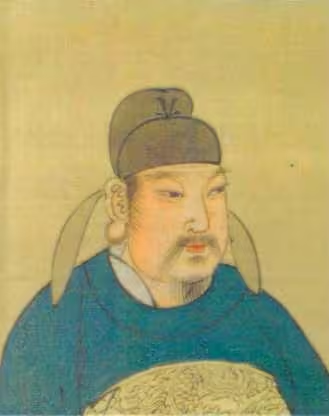
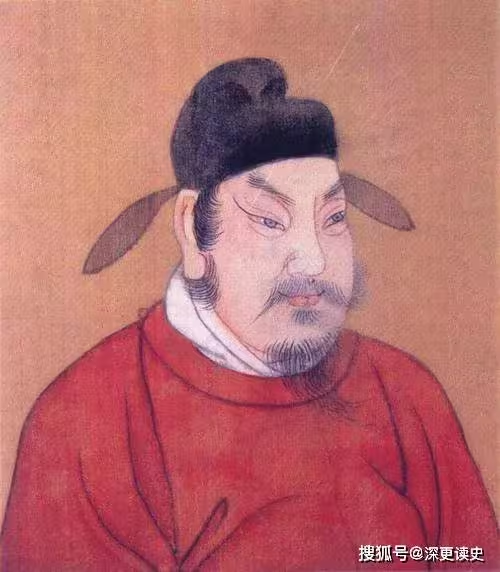
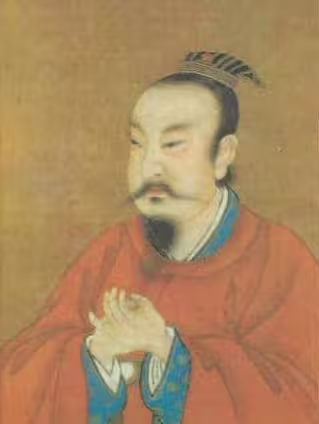
Li Cui 李漼
Reign: 859 - 873 (Xiantong)
Yizong 懿宗
Temple name
Emperor Zhaosheng 昭圣皇帝
Posthumous name
The Legacy
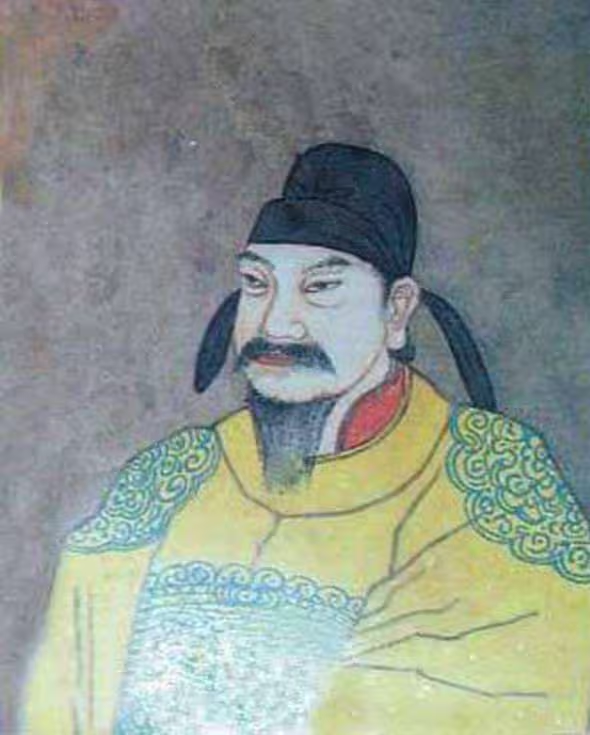
Emperor Yizong of Tang (28 December 833 – 15 August 873), personal name Li Cui, was the seventeenth emperor of the Tang dynasty, and by the consensus of every historian who wrote of him, the one who spent the Dazhong inheritance. Where his father had repaired, he consumed: the fourteen Xiantong years are a litany of funerals, festivals and revolts, of generals suppressing agrarian armies at ruinous cost while the court debated the cost of a princess’s coffin.
He was not cruel by the standards of his age, merely trivial — and the empire of 860 could no longer afford triviality. The agrarian rebellions that would consume the dynasty were born on his watch: first Qiu Fu’s in the southeast, then the garrison revolt of Pang Xun, which required the dynasty to summon the Shatuo Turks — the mercenary cavalry whose chieftains would, within two generations, rule North China in the dynasty’s name. The historians’ epitaph writes itself: the last capable emperor of the Tang was his father; the last catastrophe was prepared by him.
Reign & Achievements
The suppression of Qiu Fu (859–860). Within months of his accession, the salt-smuggler Qiu Fu raised the agrarian poor of eastern Zhejiang, took several counties and besieged Yuezhou — the first large-scale peasant rising of the late Tang. The court sent the veteran administrator Wang Shi with disciplined troops and, crucially, cavalry; Qiu Fu was captured and sent to Chang’an for execution in mid-860. The rebellion lasted barely a year. Its significance was what it announced: the southeast, the empire’s tax heart, was combustible, and the court’s margin for error was gone.
The annihilation of Pang Xun (868–869). In 868 some eight hundred garrison soldiers of Wuning Army, posted to Guilin against Nanzhao and kept there years beyond their promised term, marched home under their officer Pang Xun when the court refused their rotation — cutting across half of China and gathering the disbanded and the desperate until they numbered in the tens of thousands and took Xuzhou itself. The suppression, directed by Kang Chengxun, required armies from every quarter of the empire and the first large employment of Shatuo cavalry under Zhuye Chixin — rewarded with the imperial surname and the name Li Guochang. Pang Xun died in 869; his revolt had lasted a year and cost, by official count, more than the dynasty could honestly afford. The soldiers it consumed were the empire’s; the mercenaries it recruited would be its heirs.
The Nanzhao wars and the recovery of Annam. The Nanzhao kingdom of Yunnan, quiescent for a generation, raided the southwest through the 850s–860s and seized the protectorate of Annam (northern Vietnam). In 866 the general Gao Pian drove them out, rebuilt the walls of Jiaozhi, and restored Tang authority — the dynasty’s last unambiguous military success beyond the frontier. It was, characteristically, an achievement the court barely noticed: the emperor’s attention that year belonged to a funeral.
controversies & Failures
The funeral of Princess Tongchang (869). The reign’s defining episode was private. When his beloved daughter Princess Tongchang — married in 868 to the courtier Wei Baoheng, elevated over the chancellors’ objections — died in 869, Yizong’s grief became fiscal policy: a procession with hundreds of vessels of glazed ware, musicians by the score, the palace in full mourning while the chancellor Liu Zhan’s objections earned him exile to the far south. Wei Baoheng, the dead girl’s husband, was made chancellor while the examiners competed to compose the most extravagant elegies; the physicians who had failed to save the princess were imprisoned, and several died. The episode, fully documented in the Tongjian, became the age’s shorthand for a court that had lost the distinction between the state and the household.
The men around the throne. The Xiantong chancellorships passed between men of talent — Liu Zhan above all — and men of the bazaar: Lu Yan, whose favor was sold through a network of brokers, was exiled in disgrace in 871 and ordered to die on the road; Wei Baoheng followed him into exile and death after the emperor’s own. The pattern the Jiu Tang Shu records is monotonous: appointment on connection, disgrace on exposure, replacement by the next connection.
The debt of 873. In the emperor’s last year the court welcomed the Buddha’s finger bone from Famen Temple for the third time in the dynasty — the spectacle Xianzong’s court had nearly torn itself over sixty years before — while the registers decayed and the Yellow River valley seethed. He died in August 873 at thirty-nine, and the eunuchs enthroned his twelve-year-old son.
The Defining Trait: The Magnificent Spender
Yizong’s defining trait was scale without proportion — grief on the scale of dynasties, display on the scale of empires, indifference on the scale of habit. He presided over the last functioning decade of Tang government as a host presides over a banquet: the music was superb, the lamps were lit, and the house was already on fire at the foundations.
Anecdotes & Folklore
- The examination of elegies. After Princess Tongchang’s death, the court’s literary men were commanded to produce elegies, and the results were ranked like examination papers; the emperor kept the best on his writing desk. One candidate, the poet Luo Yin — brilliant, bitter and famously ugly — was passed over so often in these years that the phrase “Luo Yin does not pass” became a proverb of merit unrecognized. Whether he submitted an elegy is tradition; that the court’s poetry had become a favor economy is not.
- The honest chancellor’s question. Liu Zhan’s remonstrance against the funeral expenses — he asked, in effect, what tale the historians would tell of a dynasty that bankrupted its southeast for a coffin — was answered with his exile. On the road south, the story goes, he told his escort that he had expected the anger and regretted only the waste. The Tongjian records the exile and the court’s discomfort; the rest is the age’s embroidery.
- The physician’s fate. The doctors who had attended the dying princess were arrested as a body; when one of the most senior hanged himself in prison, the emperor ordered an inquiry into the prison rather than the policy. Court memoranda of the following year, tabulating the cost of the funeral, run to figures in the hundreds of thousands of strings of cash — a year’s revenue of a prosperous prefecture, by the censors’ arithmetic.
- The boy with the name of an era. He had renamed himself Cui after the classic phrase “water is the best thing” (上善若水) — the character of his name meant, in court usage, deep and still water. The censors of the next reign noted the irony: an emperor named for still water whose reign was remembered for its leaks.
References & Historical Sources
- Jiu Tang Shu (旧唐书), juan 19 (Annals of Yizong).
- Xin Tang Shu (新唐书), juan 9.
- Zizhi Tongjian (资治通鉴), juan 250–252 (the Xiantong years).
- Cefu Yuangui (册府元龟), relevant juan — the campaigns of 860 and 868–869.
- Cambridge History of China, vol. 3, ch. on the late ninth century.
- 岑仲勉 (Cen Zhongmian), 隋唐史 — on the Pang Xun revolt and the rise of the Shatuo.
- Backus, The Nan-chao Kingdom and T’ang China’s Southwestern Frontier — on the Nanzhao wars and Gao Pian’s recovery.