Personal Name:
Li Song 李诵
Reign: 805 - 805 (Yongzhen)
Shunzong 顺宗
Temple name
Emperor Zhide 至德皇帝
Posthumous name
The Legacy
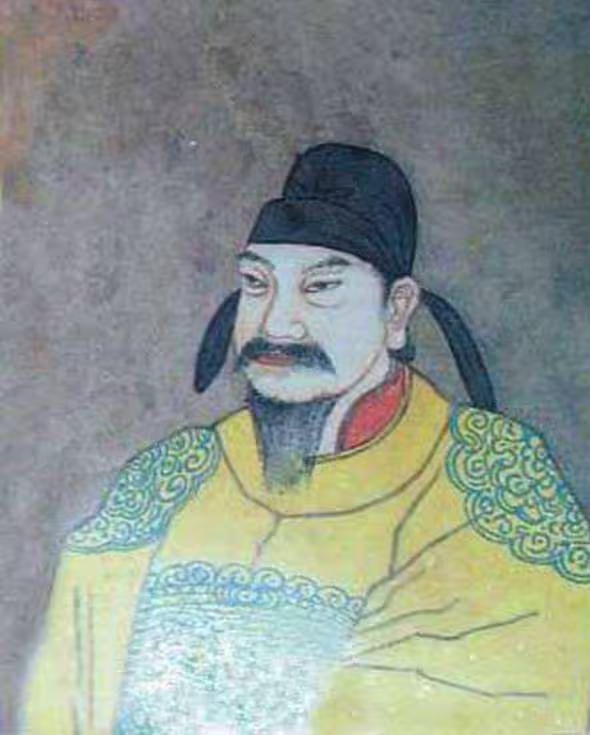
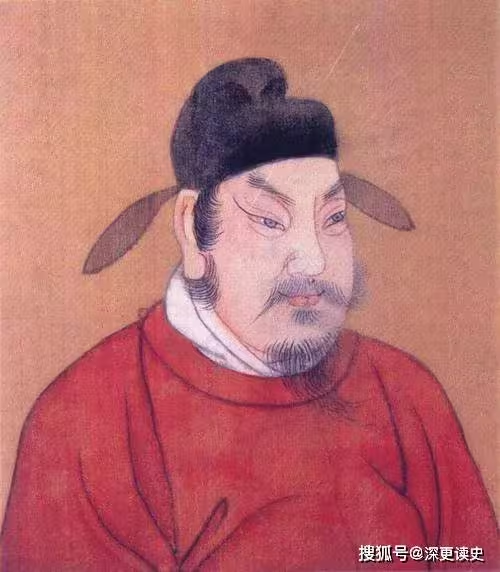
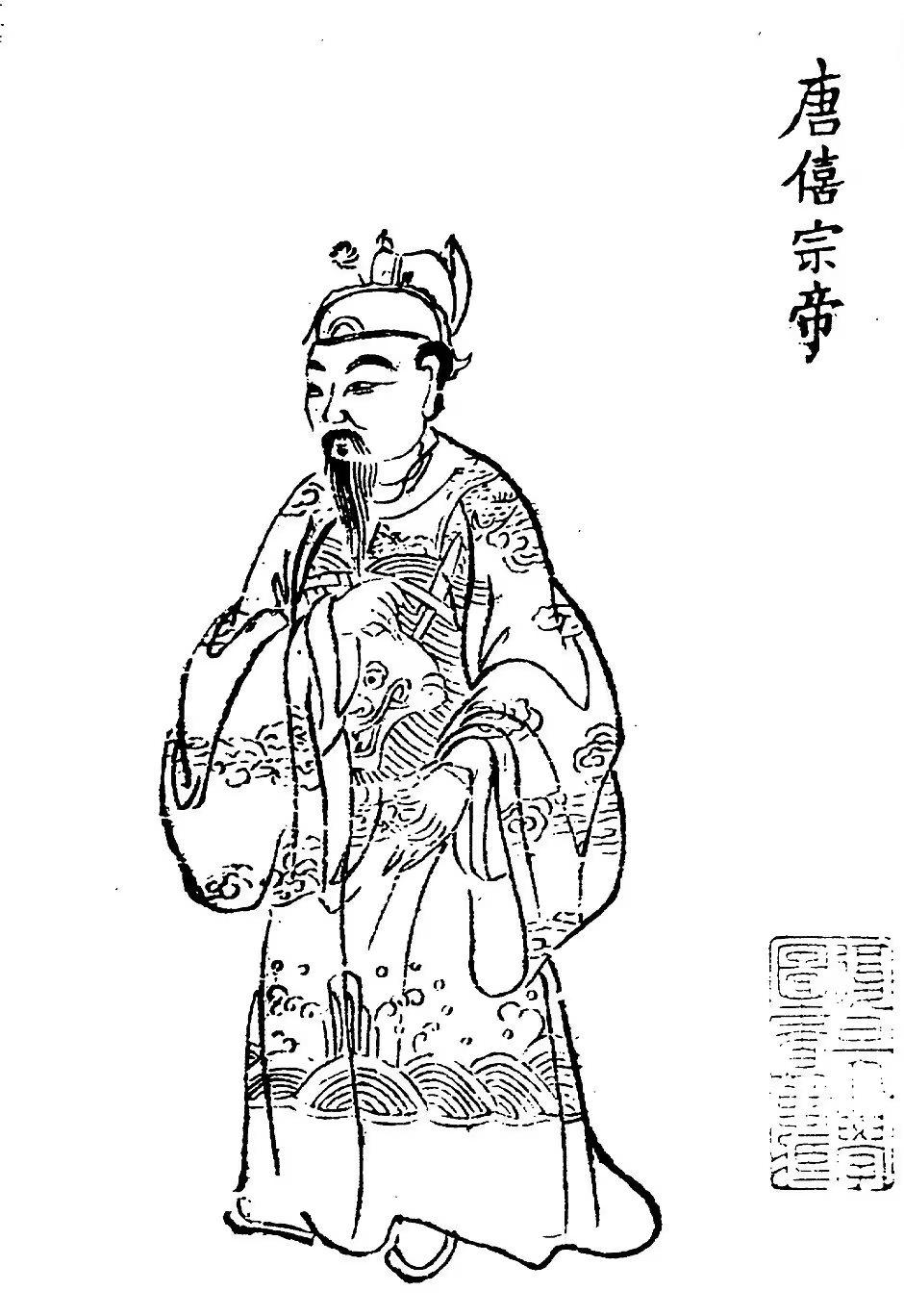
Emperor Shunzong of Tang (19 January 761 – 11 February 806), personal name Li Song, was the tenth emperor of the Tang dynasty and, at roughly six months, one of the briefest reigns in the dynasty’s history. He waited twenty-five years as crown prince — longer than any other Tang heir — and ruled for half a year, most of it unable to speak, before his own eunuchs and his sister-in-law’s rival faction bundled him off the throne.
Yet the half-year matters. The Yongzhen reform (永贞革新), enacted in his name by the group around Wang Shuwen, was the boldest attempt in late Tang history to strike at the eunuch command of the armies and at the whole apparatus of palace predation — the palace market, the imperial hunting-men, the arbitrary levies. It lasted 146 days. Its suppression set the pattern of the next four reigns: scholar-reformers versus eunuch soldiers, with the soldiers always winning. History remembers Shunzong as a mute king whose voice, briefly and through others, was the closest the late dynasty came to curing itself.
Reign & Achievements
The longest apprenticeship. Made crown prince in 780 at the age of nineteen, Li Song served through the whole Zhenyuan recovery. He was present, and by all accounts active, in the deliberations that ended the jiedushi wars; he absorbed the lesson Dezong learned at Fengtian — that the Shence Armies in eunuch hands were the true seat of power — and waited. When a court scandal involving his aunt-in-law Princess Gao nearly cost him the succession in 787, the chancellor Li Mi talked the emperor back to reason, and the prince’s position survived.
The Yongzhen reform (805). When Dezong died on 25 February 805, Li Song — already stricken by the stroke that had taken his speech in the winter of 804 — was carried to the throne. Government in his name ran through his intimate circle: Wang Shuwen and Wang Pi (the “Two Wangs”), and the brilliant young officials they promoted — Liu Zongyuan, Liu Yuxi and five others. In 146 days the reform: abolished the palace market (宫市) outright; dissolved the Five Wards’ bullies (五坊小儿), the eunuch sporting gangs that terrorized the capital’s markets; cut the arbitrary monthly “tribute” levies of the salt and iron commissions; released several hundred palace women and forbidden the further presentation of “surplus” goods; demoted or cashiered a string of notoriously corrupt intendants; and announced the grandest item of all — the transfer of command of the western garrisons, including the Shence Armies, from the eunuch commissioners to a regular military governor, Fan Xichao.
The end of the reform. The last measure was the fatal one. The eunuch establishment — above all the Shence commander Ju Wenzhen — refused the transfer, rallied, and struck: they forced the enthronement of the prince’s son Li Chun as crown prince in July, isolating the reformers, then extorted the emperor’s abdication on 3 August 805. Wang Shuwen was exiled and executed; Wang Pi died on the road; Liu Zongyuan was banished to Yongzhou, Liu Yuxi to Langzhou, and six more reformers to distant prefectures — remembered as the Eight Exiled Simas (八司马). Two of them, in exile, wrote the prose and poetry that made the age immortal.
controversies & Failures
A reign by proxy. Shunzong’s reliance on the Two Wangs drew fire even from potential allies: the reformers moved too fast, offended the regular bureaucracy as well as the eunuchs, and governed through a sickroom. Contemporaries sympathetic to every item of the program nonetheless judged the circle’s methods — back-room appointments, circumvention of the chancellery — as having made failure certain.
The abdication’s shadow. Whether the mute emperor freely signed away his throne or was coerced by eunuchs holding his son as hostage cannot now be determined; the sources were all written by the winners. What is documented is that the ex-emperor, as retired sovereign, was dead within six months — officially of his illness, at forty-five, in the first month of 806.
The Defining Trait: The Mute Reformer
Shunzong’s defining trait was the patience of the witness and the irony of the voice: a crown prince who watched the disease for twenty-five years, then — in the one season he held the scalpel — discovered that the patient had hired the surgeons’ enemies as bodyguards. He remains the dynasty’s purest case of diagnosis without remedy.
Anecdotes & Folklore
- Twenty-five years the heir. Courtiers joked bleakly that the crown prince had outlasted two emperors’ full cabinets and most of his father’s suspicions. When Dezong grew senile and harsh in his last years, it was widely assumed the old man would replace his son; the prince simply kept appearing at dawn audiences, silent and punctual, and outlasted the old man by a month.
- The blood remonstrance. The censor Liu Qichu, in the first months of the reign, knelt before the throne and beat his head against the steps until blood ran, demanding an end to the palace market — “the people’s grievance is the state’s wound.” The court was reportedly moved; the market was abolished weeks later. The scene became the stock image of Yongzhen earnestness.
- Liu Zongyuan’s snake. Banished to Yongzhou, the reform’s foremost essayist wrote his masterpieces there — among them the parable of the snake-catcher’s family, whose tax in poisonous serpents had been lighter than the tax in grain. Chinese schoolchildren have read it as a lesson in bad government ever since; few know it is the memoir of an emperor’s six months.
- The comet before the end. Court astronomers reported a comet in the summer of 805; the reformers took it as a mandate for urgency, the eunuchs as a warning against innovation, and both were right — the comet outlasted the reign.
References & Historical Sources
- Jiu Tang Shu (旧唐书), juan 14 (Annals of Shunzong).
- Xin Tang Shu (新唐书), juan 7.
- Zizhi Tongjian (资治通鉴), juan 236–237 (Zhenyuan 21 through Yongzhen 1).
- Liu Zongyuan, Liu Hedong Ji (柳河东集) — especially the Yongzhou essays, primary literary testimony of the reform’s aftermath.
- Cambridge History of China, vol. 3, ch. on the late eighth and early ninth centuries.
- 岑仲勉 (Cen Zhongmian), 隋唐史 — the standard modern narrative of the Yongzhen reform.
- Jo-shui Chen, Liu Tsung-yüan and Intellectual Change in T’ang China — on the reformers’ program and exile.