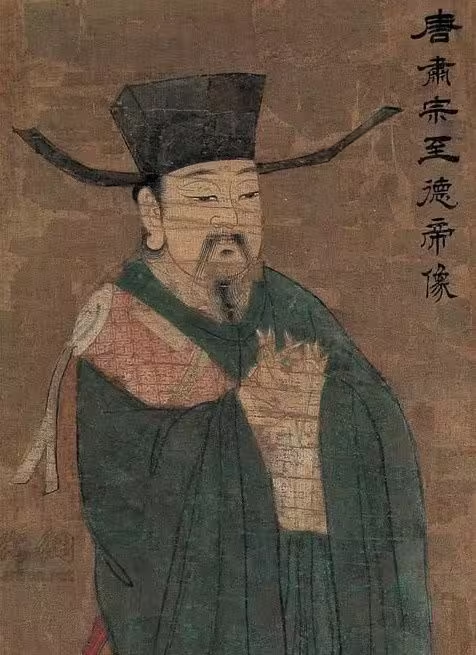
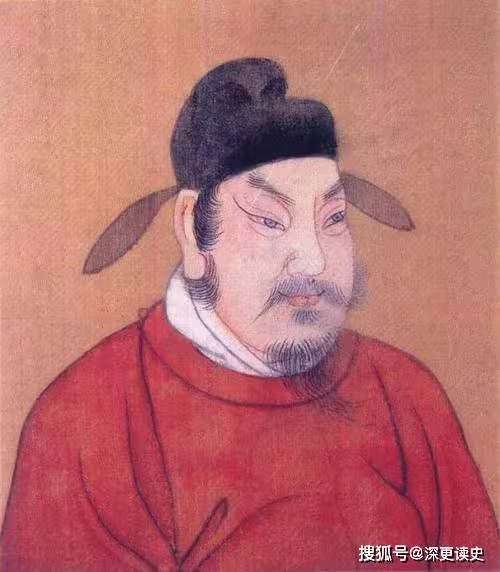
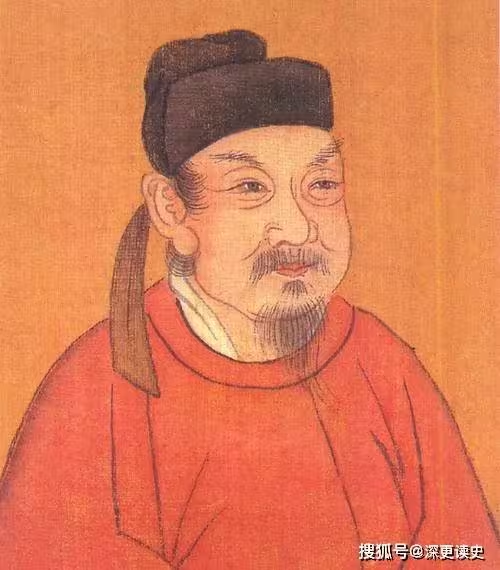
Personal Name:
Li Dan 李旦
Reign: 684 - 690 (Wenming, Chuigong, Yongchang, Zaichu)
Ruizong 睿宗
Temple name
Emperor Xuanzhen 玄真皇帝
Posthumous name
The Legacy
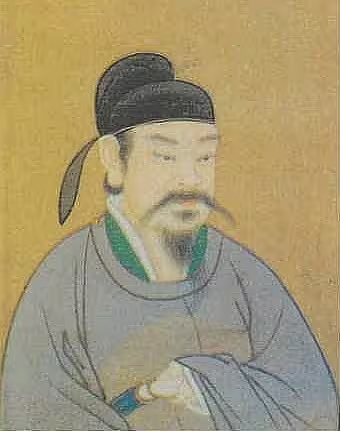
Emperor Ruizong of Tang (22 June 662 – 13 July 716), personal name Li Dan, was the fifth and, in his own way, the most unusual emperor of the Tang dynasty. He occupied the throne twice without ever truly ruling the first time, and surrendered it three times — yielding to Wu Zetian in 690, yielding the status of heir to his brother Zhongzong in 698, and abdicating to his son Xuanzong in 712. The historians of both Tang histories marveled at the feat: a man who sat beneath the most dangerous woman in Chinese history for a quarter-century and died in his bed, honored, trusted, and genuinely mourned.
His legacy is that of the indispensable survivor. The dynasty’s passage through the Wu Zhou interregnum — the deposition of an emperor, the usurpation, the restoration, the Wei clan’s attempted sequel, and the final settlement under Xuanzong — was survived at every stage by Ruizong’s refusal to press any claim to its bitter end. “Thrice he yielded the realm” (三让天下) became his epitaph in the Jiu Tang Shu, and it is not ironic: the yielding was the achievement.
Reign & Achievements
The placeholder emperor (684–690). When Wu Zetian deposed Zhongzong in February 684, she needed a compliant sovereign to legitimate her regency; Li Dan, Zhongzong’s younger brother, was crowned at once. For six years he reigned as a figurehead — barred even from administering routine business without report to the empress dowager — while Wu dismantled the Tang aristocracy, massacred the imperial clan after the failed rebellions of 688, and built her own constituency among petitioners, monks and new examination men. In 690 the Great Cloud Sutra commentary declared Wu the incarnation of Maitreya; thousands of manufactured petitions demanded she take the throne. Ruizong’s courtiers led the “spontaneous” chorus, and on 16 October 690 he yielded the empire, petitioning to be made her heir. She founded the Zhou dynasty and named him Emperor Emeritus (皇嗣), not quite crown prince, not quite prisoner.
Heir under the Zhou (690–698). The position was deadly. In 693, on the accusation of witchcraft engineered by a palace servant, both of Ruizong’s consorts — Empress Liu and Consort Dou, Xuanzong’s mother — were secretly murdered by Wu Zetian’s order. Ruizong knew and said nothing; an official investigation of him stopped only after the commoner attendant An Jincang slashed open his own belly before the court to swear the prince’s innocence. When Zhongzong was recalled in 698, Ruizong immediately petitioned to yield the heirship — and was, remarkably, allowed to live as Prince Xiang, unprosecuted through the final seven years of the Zhou.
The settlement of 710–712. After the Tanglong Coup destroyed Empress Wei’s regency in July 710, the throne was offered to Ruizong — this time genuinely. His two-year second reign was dominated by the struggle between Princess Taiping, his sister and the coup’s co-author, and Crown Prince Li Longji, his son and the coup’s sword. Ruizong’s solution was characteristic and decisive: in September 712, citing a comet as heaven’s command to “sweep out the old and spread the new,” he abdicated in favor of Xuanzong while retaining, as retired emperor, control of major appointments and great criminal cases. The arrangement gave the young emperor power without legitimacy crises — and gave Taiping rope enough to hang herself. In 713 Xuanzong’s preemptive strike destroyed her faction; Ruizong formally relinquished his remaining authority and withdrew to the Baifu Palace. The Kaiyuan era could begin.
controversies & Failures
Complicity by passivity. Ruizong’s survival strategy had a body count. He reigned while the Zhou terror consumed his clan; he accepted the throne in 710 while the sixteen-year-old Shang Emperor was deposed and, within the year, put to death; his 712 settlement left Taiping in place just long enough for one more round of bloodletting. Contemporaries forgave him almost all of it — the Zizhi Tongjian treats his silences as prudence under a reign of terror — but the pattern of benefiting from purges he did not prevent is inseparable from his biography.
The princess problem. During the Jingyun years his court was openly two courts — Taiping’s and the crown prince’s — with ministers forced to choose. Ruizong’s dithering (the demotion and recall of Yao Chong and Song Jing over the Taiping question) prolonged the instability his abdication finally resolved.
The Defining Trait: The Great Abdicator
Ruizong’s defining trait was the disciplined renunciation of power — practiced not once but at every branch point of his life, under conditions where claiming power was usually fatal. He understood, as the Jiu Tang Shu obliquely concedes, that in the age of Wu Zetian survival itself was a form of statecraft: the Tang dynasty lived on through his abdications and was twice saved by them. It is no accident that his mausoleum at Qiaoling stands serene among the Tang imperial tombs, or that his eldest son, who yielded the succession to a younger brother, was posthumously honored as the “Emperor Who Yielded” — the house of Ruizong made a family virtue of stepping aside.
Anecdotes & Folklore
- An Jincang opens his belly (693). When the Zhou secret police investigated Ruizong for witchcraft, his household attendant An Jincang — a man of no rank — cried that the prince was slandered, drew a knife, and cut open his own abdomen before the officials, letting his entrails spill as proof of his oath. Wu Zetian, told of it, was shaken and ordered the case dropped; the prince survived. The Zizhi Tongjian preserves the scene as the most terrible act of loyalty in the dynasty’s history.
- “The heirship is an instrument of the realm.” When the crown princeship fell to his eldest son Li Chengqi in 710 — the elder brother passed over as Gaozu had once passed over his — Li Chengqi memorialized that the succession was “the shared instrument of the empire: in tranquil times the eldest comes first, in times of peril the merit comes first,” and begged to yield to his brother Longji, without whom “the realm would despair of the transfer.” Ruizong agreed. Li Chengqi was later buried with the posthumous title “Emperor Who Yielded” (让皇帝) — the only such honor in the dynasty.
- The comet that ended a reign (712). A court astrologer read the comet of 712 as heaven’s broom sweeping the palace for the new; Ruizong seized the omen: “The comet means to remove the old and spread the new. The throne passes to the crown prince.” Ministers who objected that he was still vigorous were overruled; he had, by then, seen what happened to everyone who stayed too long.
- The Taoist daughters. Two of Ruizong’s daughters — Princesses Jinxian and Yuzhen — took Taoist vows and built country estates that became salons for poets and recluses; Ruizong indulged them as he indulged all his family, and the aristocratic Taoism of the Xuanzong years has its family roots in his household.
References & Historical Sources
- Jiu Tang Shu (旧唐书), juan 7 (Annals of Ruizong).
- Xin Tang Shu (新唐书), juan 5.
- Zizhi Tongjian (资治通鉴), juan 203–211 (the Zhou interregnum, the restoration, the Jingyun settlement and the Xiantian coup).
- Tang Huiyao (唐会要), juan on the imperial clan and on Taoist establishments.
- Denis Twitchett (ed.), The Cambridge History of China, vol. 3 — the chapters on the Wu Zetian period and the restoration.
- R. W. L. Guisso, Wu Tse-t’ien and the Politics of Legitimation in T’ang China — on Ruizong’s role as heir under the Zhou.
- David McMullen, State and Scholars in T’ang China, ch. 2 — on the examination men whose rise undermined the aristocracy Ruizong embodied.