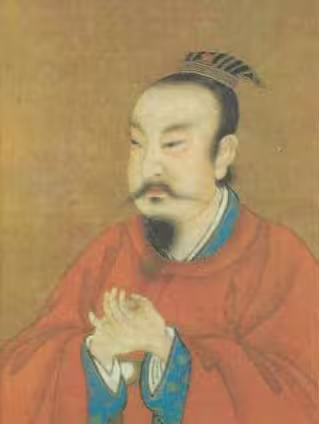
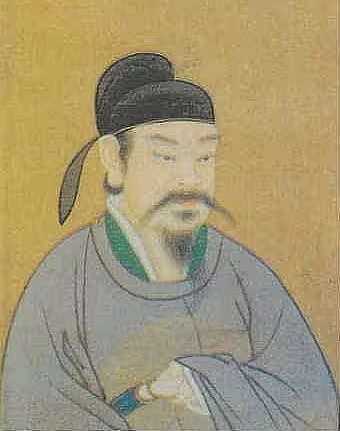
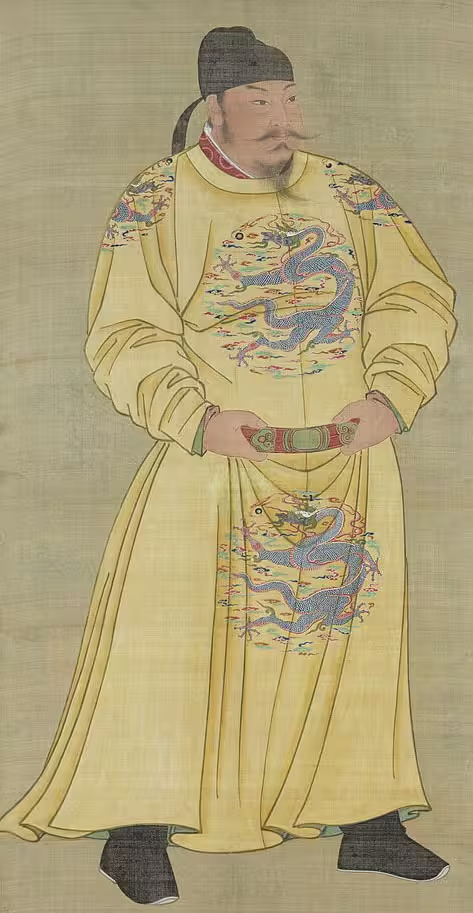
Personal Name:
Li Heng 李恒
Reign: 820 - 824 (Changqing)
Muzong 穆宗
Temple name
Emperor Ruisheng 睿圣皇帝
Posthumous name
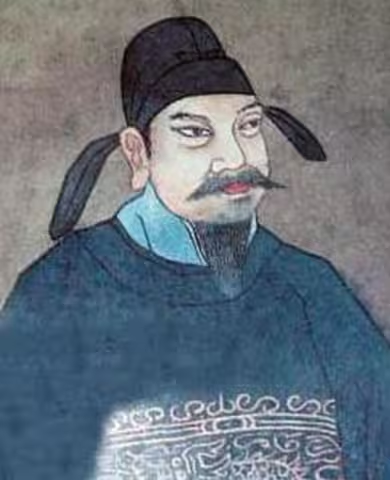
The Legacy
Emperor Muzong of Tang (14 July 795 – 25 February 824), personal name Li Heng, was the twelfth emperor of the Tang dynasty and the brief, dazzling undoer of his father’s life’s work. He inherited the Yuanhe Restoration whole — a cowed Hebei, a solvent treasury, a court that had forgotten what defeat felt like — and in four years of sport, indifference and one catastrophic policy he handed back everything: the three garrisons of the northeast in open revolt again, the demobilized armies of the interior turned into so many armed, unemployed men, and the eunuch establishment confirmed as kingmaker, since it was they who had placed him on the throne after his father’s murder.
The verdict of the historians is without mercy. The Zizhi Tongjian narrates the Changqing years as a masterclass in how fast a restoration can rot when its author dies at forty-one and his heir is a twenty-four-year-old who loved the polo ground more than the map.
Reign & Achievements
The accession bargain. Muzong’s enthronement in February 820 was the eunuchs’ settlement of their own crime: within days of Xianzong’s death, the Shence commanders eliminated the murdered emperor’s favorite, Tuqi Chengcui, and the rival prince Li Yun, and installed the crown prince Li Heng with a clean pair of hands no one believed in. The new emperor repaid the debt in the only currency they valued — inattention.
The Changqing peace with Tibet. The one durable achievement of the reign was diplomatic. In 821–822 the court concluded the Changqing Treaty (长庆会盟) with the Tibetan Empire: alliance texts declaring “uncle and nephew, their states as one” were sworn at Chang’an and at Lhasa, where the Tang commissioner Liu Yuanding journeyed to inscribe the stele that still stands before the Jokhang. The western frontier, at least, would hold for a generation.
The examination crisis of 821. When the jinshi results of 821 were challenged as rigged by powerful families — the candidates included the son-in-law of a chancellor and the protégé of a court favorite — Muzong ordered a re-examination, demoted the examiners, and unwittingly crystallized the court’s two great personal factions into the open war of Niu versus Li (牛李党争) that would poison every appointment for the next forty years.
controversies & Failures
The “demobilization” that re-armed the rebels (821). Muzong’s chancellors Xiao Mian and Duan Wenchang, reasoning that “the empire is at peace, so the troops should be stood down,” ordered a rolling disbandment of the interior armies — a fixed percentage of each unit discharged yearly, with no provision for the men. The discharged soldiers drifted home to Hebei just as the court was rotating a famously arrogant new governor, Zhang Hongjing, into the Lulong command at Youzhou. Within months the garrison mutinied, jailed the governor, and raised Zhu Kerong; in Chengde, the army massacred the loyalist hero Tian Hongzheng — the man who had surrendered Weibo’s autonomy to Xianzong — together with his household of three hundred; in Weibo itself, the dead hero’s son Tian Bu was driven to suicide by troops demanding he join the revolt. By 822 the court had lost the will to fight: amnesties were issued, and Zhu Kerong and Wang Tingcou were confirmed in their commands. The Yuanhe settlement died at twenty-six, and Hebei would not see an imperial tax collector again in Muzong’s lifetime or his sons'.
Government by game. The emperor’s energies went to polo, archery, hunting and banquets, organized with imperial thoroughness and staffed by young companions whom he promoted. The court watched the northeast burn while the ruler held record-setting matches in the palace yards.
The Niu–Li wound. The examination affair of 821 expelled one faction’s patrons and confirmed the other’s; for four decades, chancellorships, military governorships and every examination board became spoils of the feud, until the question of who governed mattered less than which team governed.
The Defining Trait: The Indulgent Heir
Muzong’s defining trait was the unforced error of appetite: he possessed one of the strongest inheritances of any emperor in the dynasty’s history and traded it, in four years, for games. Later moralists made him the stock illustration of the principle that restorations die in the second generation: his father had won the war against the provinces; Muzong lost the peace against himself.
Anecdotes & Folklore
- “The empire has no talents left.” The 821 re-examination scandal produced the age’s bitterest jest: among the disqualified were associates of nearly every powerful clan, and the chancellor Li Fengji’s ring of paid clients — remembered as the “Eight Passes and Sixteen Sons” (八关十六子) — allegedly cleared them a path. A generation of examination candidates learned that merit was now a factional property.
- The court that bet on games. Contemporary memorials complain that polo matches in the palace yard drew larger and more attentive audiences than the daily audience for state papers; one censor calculated that a single tournament consumed the annual salary of a prefecture. The emperor’s reply, in the court’s memory, was to schedule another.
- His mother’s long shadow. His mother, the formidable Consort Guo, granddaughter of Guo Ziyi, was denied the empress’s title by Xianzong; under her son she reigned as dowager without the name. She would live to see three of her grandsons — Jingzong, Wenzong and Wuzong — take the throne, a five-reign dowager unique in the dynasty’s history, and died only in 848. The last act of her long story belongs to another reign.
- The elixir question. The histories record Muzong’s death after a sudden illness in February 824; whether the court’s growing traffic in Daoist longevity pills had reached the throne is left suggestively open — the same physicians would gather around his sons.
References & Historical Sources (文献来源)
- Jiu Tang Shu (旧唐书), juan 16 (Annals of Muzong).
- Xin Tang Shu (新唐书), juan 8.
- Zizhi Tongjian (资治通鉴), juan 241–243 (the demobilization and the Hebei revolts).
- Tang Huiyao (唐会要), juan on the examinations — the 821 re-examination affair.
- Cambridge History of China, vol. 3, ch. on the ninth century.
- Michael T. Dalby, “Court Politics in Late T’ang Times,” in Cambridge History of China, vol. 3 — the seminal study of the Niu–Li alignments.
- 岑仲勉 (Cen Zhongmian), 隋唐史 — on the Changqing settlement and its collapse.