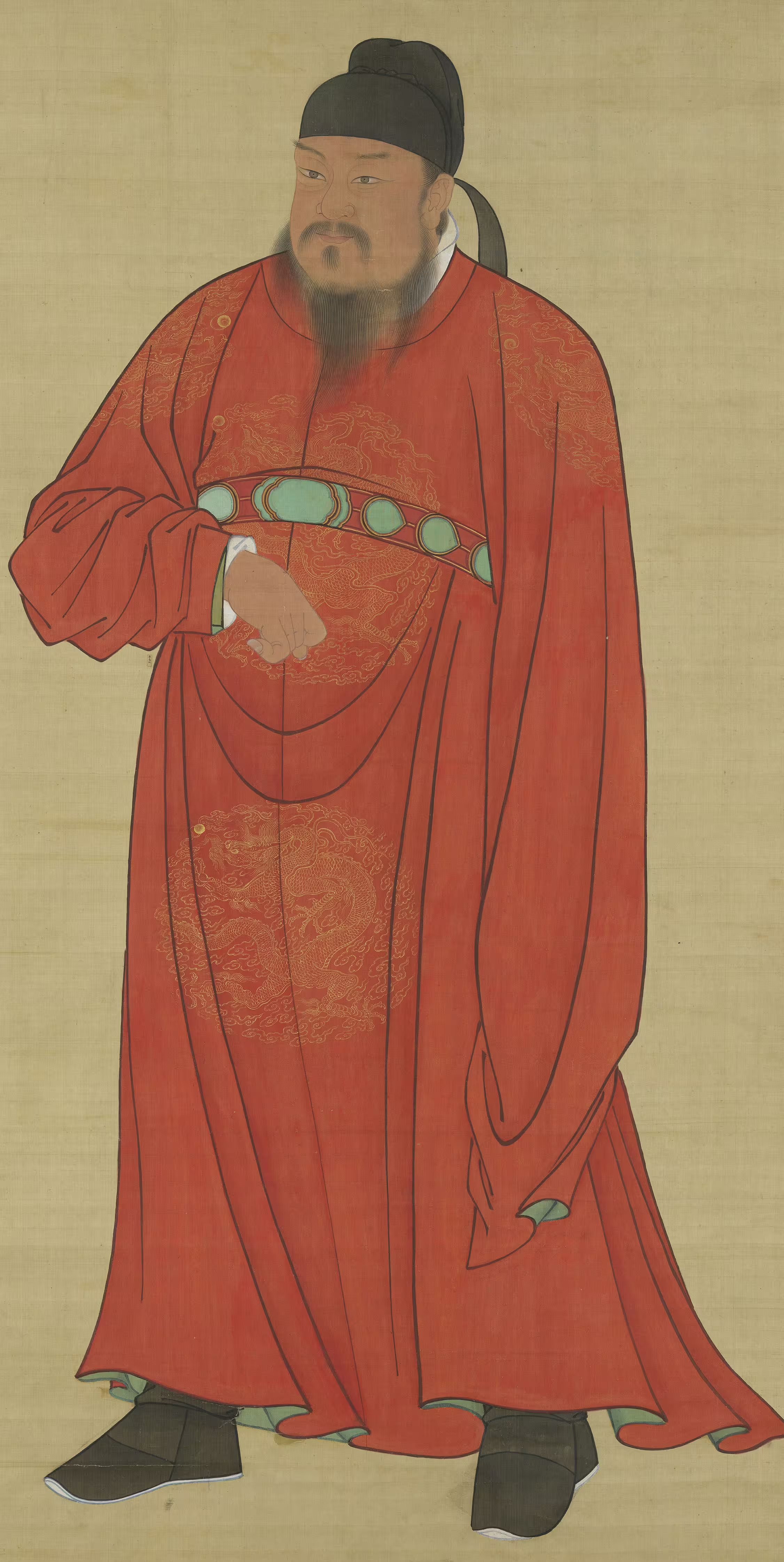
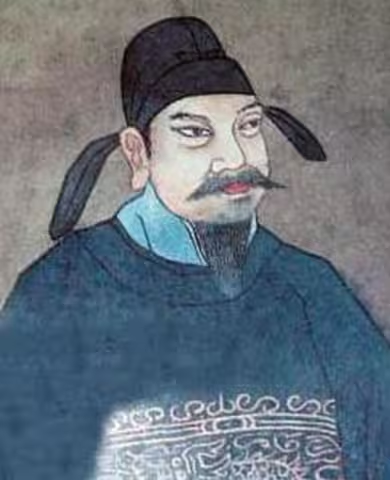
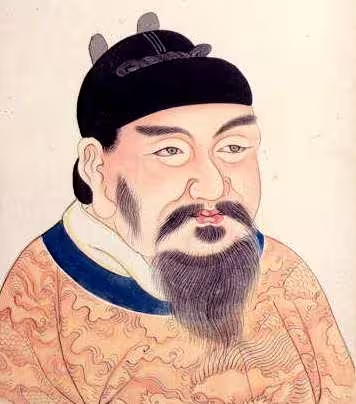
Personal Name:
Li Chu 李柷
Reign: 904 - 907 (Tianyou)
Jingzong 景宗
Temple name
Emperor Zhaoxuan 昭宣皇帝
Posthumous name
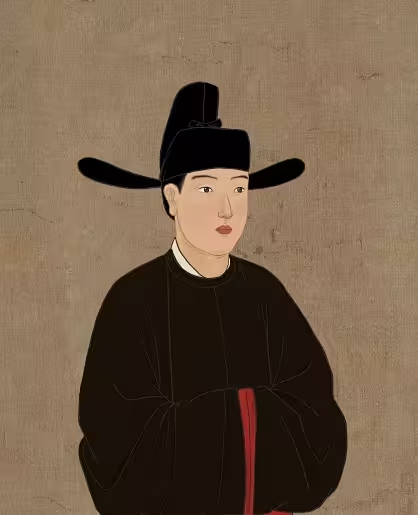
The Legacy
Emperor Ai of Tang (27 October 892 – 26 March 908), personal name Li Chu, born Li Zuo, was the twentieth and last emperor of the Tang dynasty, enthroned at twelve in September 904 by the warlord Zhu Wen three weeks after Zhu Wen’s men murdered his father, Emperor Zhaozong. His reign of less than three years was an exercise in the uses of a seal: every edict that ended the dynasty — the removal of the capital, the extinction of the imperial clan, the massacre of the bureaucracy, the final act of abdication — was issued in the name of a boy who had no more say in it than the jade of the imperial stamp had in what was written beneath it.
The historians treat him gently, because there is nothing else to do with him. The Zizhi Tongjian narrates his three years as the biography of an object: installed, displayed, and disposed of. He was deposed in the spring of 907, when Zhu Wen took the throne as the founder of the Later Liang; the next spring, aged fifteen? seventeen by the count of the times, he was poisoned in his villa at Caozhou. Sixteen years later, the Later Tang — a Shatuo dynasty claiming succession to the Tang — posthumously restored his imperial style and temple name, which is the only reason he is remembered as an emperor at all rather than as what he was: the final page of a three-century book.
Reign & Achievements
The maintenance of form. In strict truth the reign produced no achievements; but in the work of the court around the boy — the chancellors who kept the rites, the examiners who held one final metropolitan examination in 905, the keepers of the archives who preserved the dynasty’s records through the transfer to Luoyang — the forms of the Tang state continued, precisely documented, until the moment Zhu Wen chose to end them. The Jiu Tang Shu preserves the last edicts in full; read consecutively, they are the most eloquent suicide note in Chinese history, since every one of them was dictated by the hand that was about to kill the writer.
The final examination (905). Under the direction of the loyalist scholars, the dynasty’s last jinshi cohort passed its examinations at Luoyang — men who would serve every successor state for two generations. The list survives. It is the only list in the dynasty’s three centuries whose graduates outlived the dynasty they graduated into.
controversies & Failures
There is nothing to lay at the feet of a boy of twelve. The historians assign the failures of 904–907 to their authors: to Zhu Wen, who in 905 drowned the dynasty’s senior statesmen — some thirty men of the highest rank — in the Yellow River at Baima Station with the observation that “these fellows call themselves the clear stream; let them become the muddy one”; who in the same year murdered the boy’s mother, Empress Dowager He, on a fabricated charge; who in 907 demolished the palaces and ministries of Chang’an and floated the timber down the river, leaving the greatest city on earth, as the Tongjian records, “a wasteland from that day”; and who finally accepted the abdication edict — drafted by the boy’s own chancellors under guard — in the fourth month of 907. The failures were complete, and none of them were his.
The Defining Trait: The Seal (传国玉玺的末代主人)
Ai’s defining trait is the one he was given: instrumentality without agency. He is the limiting case of the late Tang emperor — Wenzong saw his cage, Zhaozong battered against his, and Ai was simply the cage’s last occupant, too young even to rattle the bars. Later ages, kinder than his own, have granted him precisely the epitaph his life suggests: not a bad emperor, not a good one, but the last name on the list.
Anecdotes & Folklore
- The edict he did not write. The abdication instrument of 907 — in which the boy emperor “voluntarily” yielded the empire to the Prince of Liang — was composed by the chief ministers under supervision, presented for the imperial seal, and promulgated with full ceremony at Luoyang. The Tongjian notes, with its characteristic dryness, that the emperor was thirteen? sui fifteen? and did not speak at the ceremony. The seal did the talking.
- The clear stream becomes muddy (905). When Zhu Wen’s adviser Li Zhen — a jinshi graduate himself, embittered by years of failing the examinations — urged the drowning of the exiled aristocrats at Baima ford, the age received its most quoted atrocity and its most quoted quip in a single act. “These men style themselves the clear stream of the realm,” said Li Zhen; “they should be thrown into the Yellow River to make a muddy stream of it.” The corpses were thrown in. The phrase outlived everyone present.
- The nine princes (904). Within months of his father’s murder, the boy’s elder brothers — nine imperial princes, including the deposed crown prince — were lured to a banquet at Zhu Wen’s residence at Luoyang and strangled in a row; the dynasty’s direct line was thus cleared before the last emperor had finished his first winter. The chronology of the Tongjian places the banquet in the eleventh month of 904, when the new reign was barely two months old.
- The restoration of a name (923). When the Later Tang conquered the Later Liang in 923, its Shatuo founder — ruling from Luoyang, styling himself the continuator of the Tang — posthumously honored the murdered boy with the temple name Jingzong and the full imperial posthumous style, reinterred him with ceremony, and thereby re-legitimated his own throne at one stroke. The dead puppet had become, twenty years on, the keystone of a new dynasty’s foundation myth.
References & Historical Sources
- Jiu Tang Shu (旧唐书), juan 20 (Annals of the last years, through the abdication).
- Xin Tang Shu (新唐书), juan 10.
- Zizhi Tongjian (资治通鉴), juan 265–266 (Tianyou 1 through the end of Tang).
- Jiu Wudai Shi (旧五代史) and Xin Wudai Shi (新五代史), annals and biographies of Zhu Wen — the usurper’s side of 904–908.
- Robert M. Somers, “The End of the T’ang,” in Cambridge History of China, vol. 3.
- 岑仲勉 (Cen Zhongmian), 隋唐史, the final chapters.